Our website uses cookies to distinguish you from other users of our website. This helps us to provide you with a good experience when you browse our website and also allows us to
improve our site. By continuing to browse our website, you’re agreeing to our use of cookies. For more information, please read our
Our website uses cookies to distinguish you from other users of our website. This helps us to provide you with a good experience when you browse our website and also allows us to
improve our site. By continuing to browse our website, you’re agreeing to our use of cookies. For more information, please read our

Paradigm
Paradigm’s Culture for Everyone Platform seamlessly integrates AI-enabled software with a team of experts to help companies build high-performance cultures where everyone can do their best work.
Most culture assessments miss the mark. They often capture only surface-level sentiment, such as how employees feel on a given day, but fail to connect culture to what truly drives the business: engagement, decision-making, performance, and retention.
But culture isn’t just a soft signal—it’s a complex system. One that can be measured, diagnosed, and intentionally shaped to fuel organizational outcomes.
In this guide, you’ll learn how to run a culture assessment that connects employee experience directly to business results. We’ll take a deep-dive into our step-by-step process for evaluating culture in a way that builds buy-in, translates insight into action, and drives sustainable change.
What Is a Culture Assessment?
A culture assessment is a structured process for evaluating the values, behaviors, systems, and employee experiences that shape how work gets done across an organization.
Done right, culture assessments do more than capture feedback. They reveal the alignment (or misalignment) between your company’s stated values and your employees’ lived experience.
With Paradigm, this means evaluating practices across 10 key categories that shape organizational outcomes, including inclusive practices, hiring, leadership enablement, growth mindset, and communication.
Looking across these categories provides clarity into both the employee experience and the organizational systems behind it. That clarity empowers HR leaders to:
- Boost engagement and retention by uncovering what motivates or frustrates employees.
- Diagnose systemic barriers to performance, innovation, or inclusion.
- Improve strategy execution by ensuring your culture supports—not undermines—organizational priorities.
In other words, a culture assessment isn’t just a listening exercise. It’s a strategic lens into what’s enabling or hindering success, making it one of the most powerful tools HR leaders can use to shape long-term performance.
Why Culture Assessments Matter
Culture isn’t just a nice to have, it’s one of the most powerful levers HR leaders can use to drive business results. A strong culture creates alignment between employees’ day-to-day experiences and the organization’s strategic priorities.
When that alignment is in place, companies see measurable improvements in engagement, retention, and performance. Companies with strong cultures outperform peers by 16.5%, and that belonging alone can drive a 56% increase in job performance and a 50% drop in turnover risk.
Toxic cultures, on the other hand, are costly: SHRM’s 2024 State of Global Workplace Culture report found that 57% of employees in toxic cultures are actively considering a new job, and many who stay do so out of fear, leading to disengagement and performance declines.
For HR leaders, culture assessments provide a way to get ahead of these risks and make culture actionable. By identifying where systems, policies, or behaviors are enabling or undermining success, you can build strategies that strengthen retention, unlock performance, and reduce risk.
In short, a high-impact culture assessment moves culture from being seen as “intangible” to being a core business driver.
How to Conduct a Culture Assessment: Step-by-Step Guide
With the right process, culture becomes one of the most powerful levers you have to connect people, performance, and purpose.
Here’s Paradigm’s step-by-step approach to running a culture assessment that delivers insight, builds buy-in, and drives sustainable change:
Step 1: Define the Purpose of Your Assessment
Culture assessments that succeed start with clarity around the question, “What business problem are you trying to solve?”
Is your goal to reduce attrition? Improve engagement post-reorg? Build a scalable, high-performance culture ahead of rapid growth?
Defining your purpose up front ensures alignment with stakeholders and keeps culture work from being dismissed as “soft.”
Paradigm’s Tip: Avoid running assessments just to “see how people feel.” Frame the work around uncovering which aspects of workplace culture are supporting or blocking your business strategy.
Step 2: Choose the Right Data Sources
Culture is multidimensional. Relying solely on surveys won’t give you the full picture. Instead, combine three types of data to get a comprehensive view:
- Quantitative data: Engagement scores, inclusion surveys, and HRIS outputs
- Qualitative input: Focus groups, exit interviews, and listening sessions
- Operational patterns: Promotion rates, compensation trends, and attrition data
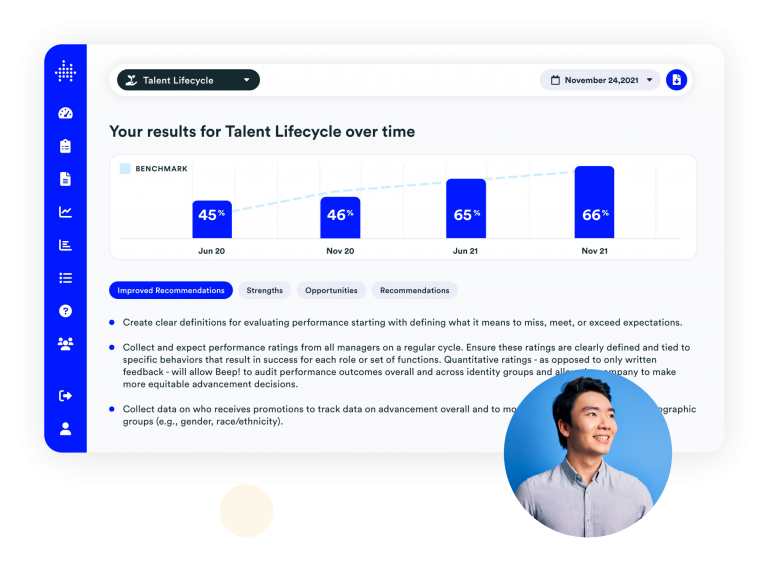
Paradigm’s Tip: Look for patterns across multiple inputs. When qualitative themes align with quantitative data, you can make a stronger case for action. Blueprint unifies these data streams in one place and uses AI to surface patterns, gaps, and inequities that are easy to miss in siloed systems.
Step 3: Prepare Your Organization
To get meaningful insights, you need employees to trust the process. Transparency is key:
- Explain the why: e.g., “We’re assessing culture to improve workplace inclusion and support performance.”
- Set expectations: Be clear about anonymity, confidentiality, and how results will be used.
- Signal leadership buy-in: When leaders visibly support the process, employees are more likely to engage honestly.
Paradigm’s Tip: Equip managers with talking points so they can answer employee questions with confidence. Paradigm’s Inclusive Leadership training also coaches leaders on how to share clear, culturally aware messages that earn trust.
Step 4: Assess Across 10 Culture Categories
Strong assessments don’t just measure sentiment, they evaluate the full system. To understand how culture is working in your organization, gather input across these 10 categories:
- Inclusive practices
- Hire
- Develop
- Engage and retain
- Leadership enablement
- Communication
- Purpose
- Growth mindset
- Data-driven decision-making
Paradigm’s Tip: Make sure your assessment questions explore both systems (e.g., policies and practices) and experiences (how employees actually feel those systems play out).
Step 5: Analyze and Interpret the Results
Once data is collected, surface insights at multiple levels:
- By group: Compare results across demographics, roles, and tenure.
- By variance: Don’t just look at averages, look at who is having a great experience and who’s struggling.
- By alignment: Identify where employee experiences diverge from stated company values.
Paradigm’s Tip: Go beyond flagging gaps. Look for root causes and themes you can act on, such as inconsistencies in promotion decisions or communication breakdowns between leadership and employees.
Curious how your workplace culture and inclusion strategies compare? See how other companies are hopping on the latest trends in our State of Culture and Inclusion report.
Step 6: Translate Insights into Strategic Actions
This is where many assessments fall short. The goal isn’t just to see your current culture—it’s to change it.
Your culture assessment insights should help you:
- Identify the biggest points of misalignment between company values and employee experience.
- Prioritize interventions based on business risk, employee impact, and organizational readiness.
- Connect culture actions to broader HR and business strategies.
Paradigm’s Tip: Keep actions specific and measurable. For example, instead of “improve communication,” try “implement quarterly all-hands Q&A sessions with leadership.”
Step 7: Communicate Findings and Next Steps
Transparency earns trust. Share what you learned and how you plan to respond:
- Tailor the message: Executives need high-level takeaways, while employees want to know what changes to expect.
- Be candid: Acknowledge where culture isn’t working as intended.
- Emphasize progress: Frame culture as an ongoing journey, not a one-time fix.
Paradigm’s Tip: Share short, clear summaries that highlight both wins and opportunities. Employees are more likely to trust future assessments if they see follow-through now.
Step 8: Monitor Progress and Iterate Over Time
Culture is dynamic. It shifts with every reorg, hire, and market change. Sustained impact requires ongoing measurement where you:
- Reassess regularly, whether that’s quarterly, semiannually, or annually.
- Track progress across categories, teams, and demographics.
- Tie culture outcomes back to business metrics like retention, engagement, and performance.
Paradigm’s Tip: Treat culture like any other strategic initiative: set benchmarks, track KPIs, and share updates to build accountability.
What Methods and Tools Can You Use to Assess Company Culture?
If you’re considering a culture assessment, you’ve likely come across legacy models like the OCAI (Organizational Culture Assessment Instrument), Denison Culture Survey, or the Competing Values Framework. These tools can be useful for identifying broad culture archetypes or diagnosing high-level alignment between your current culture and strategy.
However, in today’s workplace, where inclusion is a competitive differentiator along with belonging and agility, these traditional approaches often fall short in three critical ways:
- They lack dimensionality. Most legacy tools don’t measure how culture is experienced differently across identity groups, levels, or functions, which means they miss key insights about equity and inclusion.
- They’re static. These tools provide a snapshot in time, but they don’t track change or allow leaders to iterate in real time.
- They stop at insight. Traditional models rarely provide a roadmap for action, leaving HR leaders with data but no direction.
To meet the needs of diverse, high-performance organizations, culture assessments need to be multidimensional, actionable, and inclusive by design. That’s why leading organizations are expanding beyond legacy models to evaluate culture across 10 critical categories that directly influence business outcomes:
- Attract
- Hire
- Develop
- Engage
- Leader and employee enablement
- Effective communication
- Data-driven decision making
- Clear purpose and strategy
- Growth mindset
- Inclusive and fair practices
These categories allow HR leaders to evaluate not just “what people think” but how organizational systems, policies, and leadership behaviors shape the employee experience.
Legacy Culture Assessment Tools vs. Paradigm’s Modern Approach Compared
Primary Focus
- Paradigm culture assessment: Inclusion-centered, performance-driving employee experience
- Legacy tools like OCAI and Denison: Broad organizational culture types
Assessment Dimensions
- Paradigm culture assessment: 9 categories covering systems, leadership, and employee experience
- Legacy tools like OCAI and Denison: General traits like flexibility vs. control
Equity and Inclusion Integration
- Paradigm culture assessment: Embedded throughout every category and insight
- Legacy tools like OCAI and Denison: Limited or siloed
Demographic Breakdown
- Paradigm culture assessment: Intersectional analysis by identity, role level, tenure
- Legacy tools like OCAI and Denison: Minimal
Actionability
- Paradigm culture assessment: Action-ready insights with clear interventions
- Legacy tools like OCAI and Denison: High-level insights only
Data Sources Integrated
- Paradigm culture assessment: Surveys, HRIS, engagement, and qualitative inputs
- Legacy tools like OCAI and Denison: Self-report surveys only
Tracking Over Time
- Paradigm culture assessment: Ongoing maturity measurement with AI-powered pattern detection and risk flagging
- Legacy tools like OCAI and Denison: One-time snapshot
Paradigm’s Culture Assessment Framework
Most culture assessments stop at telling you what people think. Paradigm’s approach goes further, helping HR leaders understand not only how employees experience culture, but also what organizational systems, policies, and leadership behaviors are driving those experiences.
Our framework evaluates workplace culture across 10 categories that directly impact employee satisfaction, retention, performance, and engagement. Unlike traditional assessments, this framework connects employee experience to strategic outcomes and provides a clear path forward.
Here’s a look at the categories and what they measure:
1. Attract
Do your employer brand, outreach strategies, and reputation signal that your organization is a place where everyone can thrive?
When you’re trying to attract top candidates, it’s important that those potential employees see themselves succeeding at your organization.
Paradigm examples how your company presents itself externally and whether your recruiting channels, messaging, and partnerships are reaching broad and representative talent pools. We also assess whether candidates perceive your organization as fair, inclusive, and aligned with their values.
When companies build cultures for everyone, they attract stronger, more diverse talent pipelines, and gain a competitive edge in a tight labor market .
2. Hire
Do your hiring practices attract, evaluate, and select candidates fairly and inclusively?
Even well-intentioned hiring processes can introduce bias if they lack structure. Research shows that objective, structured processes produce more equitable and higher-quality outcomes.
This dimension evaluates whether your organization uses consistent criteria, structured interviews, clear rubrics, and documented decision-making processes. It also examines whether hiring outcomes are regularly reviewed for disparities.
The more objective and transparent your hiring process, the more likely you are to select the best talent.
3. Develop
Do employees feel supported in their professional growth and development?
Access to opportunity is one of the most powerful predictors of long-term engagement and retention. SHRM’s 2024 State of the Global Workforce report found that a lack of growth opportunities is the most common reason (second only to pay) employees leave, even at companies with strong cultures.
Assessing where opportunity gaps exist—and why—is essential to building a culture that doesn’t just retain talent, but grows it equitably.
4. Engage
Do people feel energized by their work and committed to staying with your organization?
Engagement is often treated as a standalone metric. But it’s the outcome of multiple upstream culture drivers: belonging, fairness, leadership effectiveness, and access to growth.
Our research shows that when employees feel they belong, they’re 10 times more likely to be engaged. That’s why we examine not just engagement scores, but what predicts them. This dimension helps organizations identify where engagement gaps exist and which systemic factors contribute to them.
5. Leader and Employee Enablement
Are leaders equipped to build inclusive, high-performance teams?
Leaders shape culture more than any policy. But inclusive leadership doesn’t happen automatically. When leaders lack structure in decision-making, don’t actively foster belonging, or unintentionally silence certain voices, performance suffers.
Paradigm’s research identifies four behaviors that distinguish inclusive leaders: Objectivity, Belonging, Voice, and Growth. This category evaluates whether leaders are consistently applying these behaviors, and whether employees have the tools to contribute to culture as well.
6. Effective Communication
Is information shared clearly, consistently, and inclusively across the organization?
Communication builds trust—or erodes it.
This dimension evaluates whether employees understand how decisions are made, how strategy connects to their work, and how to raise concerns safely. It also examines whether communication norms unintentionally privilege certain voices over others.
Inclusive cultures ensure transparency in decision-making and create space for dialogue, especially during times of change.
7. Data-Driven Decision Making
Do leaders and HR teams use data to make equitable, transparent decisions?
High-performance cultures are built on evidence, not intuition alone. Without data, leaders are left reacting to surface-level outcomes. With data, they can identify root causes and take targeted action.
This dimension examines whether organizations integrate data across hiring, promotions, compensation, attrition, and engagement. It also looks at whether the organization proactively analyzes that data for patterns and disparities.
8. Clear Purpose and Strategy
Do employees find meaning in their work and alignment with organizational values?
Employees perform better when they understand how their work contributes to something larger. When their purpose is clear, alignment and performance improve.
A culture for everyone connects day-to-day responsibilities to a clear mission and strategy . This dimension measures whether employees see that connection, and whether leadership reinforces it consistently.
9. Growth Mindset
Does your culture encourage continuous learning, risk-taking, and resilience?
A growth mindset culture fuels belonging, innovation, and resilience. When employees feel safe to learn and fail forward, they’re more likely to take initiative and stay with your company long-term. This mindset is especially important for organizations navigating change or scaling quickly.
10. Inclusive and Fair Practices
Do your systems, policies, and practices promote fairness and equity across the organization?
This isn’t just a values issue, it’s a performance issue. When employees perceive inequities in how leaders make decisions or allocate opportunities, trust erodes, employee satisfaction falters, and disengagement rises. This is especially critical in hybrid and remote environments, where inconsistent norms and invisible bias can widen access gaps.
Gallup found that, while remote employees report higher levels of engagement than hybrid and on-site employees, they’re less likely to experience high levels of well-being.
An actionable, data-driven culture strategy is key for improving remote inclusion, standardizing expectations, reducing bias in decision-making, and strengthening trust across distributed teams.
Each of these categories is actionable. Taken together, they form a comprehensive snapshot of your culture’s strengths, gaps, and maturity. For HR leaders, they provide a roadmap to design interventions that are equitable, strategic, and tied to business results.
How Paradigm Builds on and Advances Organizational Culture Surveys
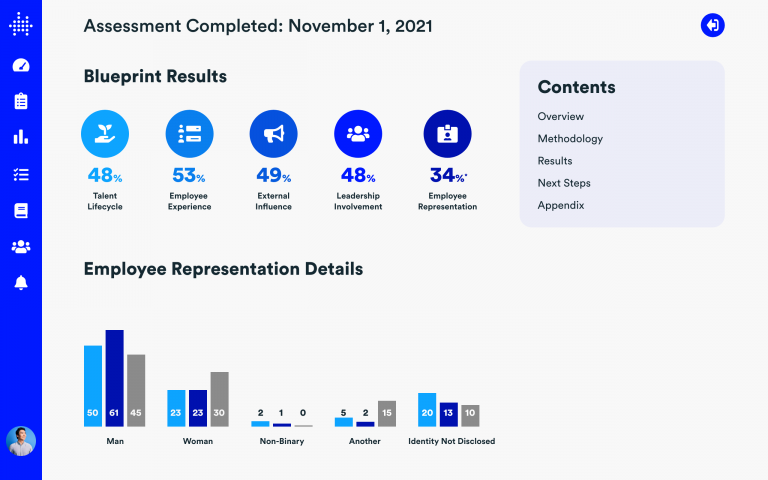
Many traditional culture assessments were built for a different workplace reality, one where culture was viewed as a static trait, not a system that could be intentionally designed, measured, and improved. Today’s organizations need more than a one-time snapshot; they need a culture strategy that’s inclusive, actionable, and adaptive to change.
That’s where Paradigm comes in.
The Culture for Everyone Platform combines advanced AI with behavioral science and expert consulting to help organizations measure culture across the 10 categories, and then take action on what matters most. Unlike legacy tools, Paradigm’s approach is:
Culture and Inclusion by Design
Inclusion isn’t a separate track, it’s embedded in every category. From hiring and promotion practices, to leadership behaviors, to data-driven decision-making, inclusion is treated as a core driver of business performance, not an optional add-on.
AI-Powered for Pattern Recognition
Paradigm’s AI integrates data from HRIS, surveys, focus groups, and more to:
- Identify systemic inequities,
- Spot emerging cultural risks, and
- Prioritize where interventions will have the greatest business impact.
This allows HR leaders to see not just what’s happening, but why it’s happening and what to do about it.
Integrated Across Platforms
Rather than leaving survey data siloed, Paradigm’s platform connects culture insights with:
- Talent data (hiring, promotions, attrition)
- Engagement and performance reviews
- Employee feedback channels
This creates a comprehensive view of organizational health and ties cultural insights directly to business outcomes.
Benchmarking Organizational Maturity in Real Time
Culture is never “done.” Paradigm tracks culture maturity across five strategic dimensions and benchmarks your progress against peer organizations. Leaders can monitor improvement in real time, ensuring accountability and transparency at every stage.
Infused With Strategy-Backed Expert Support
Most tools stop at data. Paradigm goes further by providing:
- Curated playbooks and guides that translate insights into immediate action
- Expert facilitation and training to enable and train inclusive leaders
- Ongoing consulting support to help HR teams design and sustain culture strategies that work
Why does this matter? Because our approach transforms culture assessments into strategic infrastructure for change.
By embedding inclusion, leveraging AI, and connecting insights to action, HR leaders gain a powerful tool to not only measure culture but also evolve it, driving higher engagement, stronger performance, and long-term retention.
Drive Sustainable Culture Change with Paradigm
Running a culture assessment is one of the most powerful steps HR leaders can take to align employee experience with business outcomes. By following a clear process, including defining purpose, gathering the right data, evaluating culture across 10 categories, and translating insights into action, you can make culture measurable, actionable, and directly connected to performance.
But assessment is just the beginning. Sustaining change requires more than one-off insights, it requires the right infrastructure to track culture over time, connect it to business metrics, and ensure leaders and employees have the tools to build the culture you aspire to.
That’s where Paradigm comes in.
With our Culture for Everyone Platform, you gain more than an assessment. You gain a partner in building high-performance, inclusive cultures:
- Blueprint: Get insight and take action with AI-powered analysis, real-time benchmarking, and tailored recommendations.
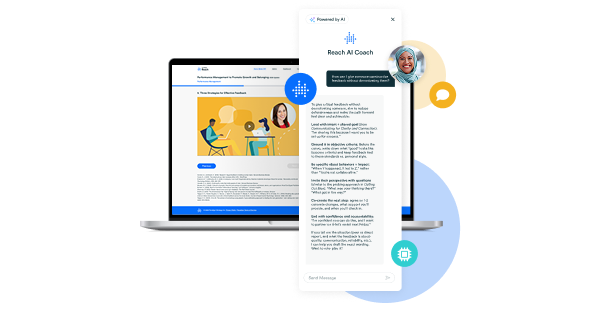
- Reach: Enable people with blended learning programs that equip leaders and employees with inclusive skills.
- Expert Services: Partner with our interdisciplinary team for strategic consulting, facilitation, and coaching.
Unlike static surveys, Paradigm helps you embed inclusion into everyday decision-making, leadership practices, and performance systems. The result: a culture that’s not just measured, but strengthened to drive engagement, retention, and long-term business impact.
If you’re ready to go beyond surface-level efforts and build a workplace where culture becomes your competitive advantage, Paradigm is the place to start.