Our website uses cookies to distinguish you from other users of our website. This helps us to provide you with a good experience when you browse our website and also allows us to
improve our site. By continuing to browse our website, you’re agreeing to our use of cookies. For more information, please read our
Our website uses cookies to distinguish you from other users of our website. This helps us to provide you with a good experience when you browse our website and also allows us to
improve our site. By continuing to browse our website, you’re agreeing to our use of cookies. For more information, please read our


Paradigm
Paradigm’s Culture for Everyone Platform seamlessly integrates AI-enabled software with a team of experts to help companies build high-performance cultures where everyone can do their best work.
Diversity, equity, and inclusion (DEI) has evolved from an HR buzzword into a strategic imperative that shapes inclusive workplace culture, drives innovation and protects organisations from legal risk. Yet confusion persists about what DEI truly means—and how it translates into practical workplace outcomes.
This guide unpacks what DEI means for UK employers, addresses common misconceptions and demonstrates how an evidence-based approach can transform good intentions into measurable results.
Key Takeaways
- DEI encompasses diversity (representation of differences), equity (fair access to opportunities), and inclusion (ensuring everyone belongs and can contribute fully).
- The UK Equality Act 2010 protects nine characteristics, making DEI both a legal obligation and a performance driver.
- Effective DEI extends beyond demographics to include socioeconomic background, neurodiversity, and lived experiences.
What Is DEI?
DEI is an acronym that stands for diversity, equity, and inclusion—three interconnected concepts that create fairer and more effective workplaces.
Diversity represents the presence of differences within an organisation. This includes visible characteristics like race, gender, and age, alongside less apparent dimensions such as neurodiversity, socioeconomic background, and thought diversity.
Equity ensures everyone has fair access to equal opportunities, resources, and advancement. Unlike equality—which provides identical treatment—equity recognises that people start from different positions and may need different support to succeed.
Inclusion means creating an environment where all employees feel valued, respected, and able to contribute authentically. Inclusive environments actively remove barriers and amplify diverse voices in decision-making.
What Is EDI?
In the UK, you’ll often encounter “EDI” rather than “DEI”. EDI stands for equality, diversity, and inclusion. The terminology difference reflects the UK’s legislative framework.
The Equality Act 2010 protects people from discrimination based on age, disability, sex, sexual orientation, marriage and civil partnership, gender identity, pregnancy and maternity, race, and religion or belief. With “equality” explicitly named in law, UK organisations naturally adopted EDI terminology.
EDI and DEI are functionally equivalent. Both frameworks pursue the same goals: diverse representation, fair treatment, and inclusive cultures.
What Is DEIB?
DEIB adds “belonging” to diversity, equity, and inclusion. Belonging captures the emotional experience of being valued and accepted as your authentic self. Whilst inclusion efforts focus on structural practices, the sense of belonging measures how people actually feel at work.
Research demonstrates belonging’s impact. Data from our State of Culture & Inclusion report shows that employees who feel they belong are 10 times more likely to be engaged, directly affecting retention and performance.
The shift from DEI to DEIB reflects growing understanding that structural changes alone don’t guarantee positive experiences.
What DEI Really Means
DEI extends far beyond the visible demographics that dominate public discourse. Effective DEI initiatives recognise multiple dimensions. Here are some examples:
- Demographic: Race, ethnicity, gender, age, sexual orientation, and disability
- Cognitive: Problem-solving approaches, learning styles, and perspectives
- Experiential: Socioeconomic background, educational pathways, and career trajectories
- Neurological: Neurodivergence, including ADHD, autism, and dyslexia
- Organisational: Department, seniority, tenure, and function
Cognitively diverse teams can solve complex tasks up to 58% faster than organisations without a diverse workforce. This finding underscores why limiting DEI efforts to protected characteristics misses significant opportunities.
Consider two scenarios. In the first, a technology team comprises people from identical educational backgrounds who’ve followed similar career paths. In the second, the team includes a former teacher, someone who changed careers at 40, and a person who learned to code independently.
The second team brings richer perspectives that anticipate diverse user needs, challenge assumptions and spot risks others miss.
Equity vs Equality in a UK Context
HR leaders often confuse equity and equality. Equality means treating everyone identically—everyone receives the same resources, opportunities, and support regardless of their starting position. Equity acknowledges different starting points and provides what each person needs to succeed. It recognises that identical treatment doesn’t produce fair outcomes when people face unequal barriers.
We can clarify this difference with a common workplace example. An equality approach provides all employees with standard desk equipment. An equity approach assesses individual needs and provides ergonomic chairs for those with back conditions, screen readers for visually impaired employees, and standing desks for those who request them.
The Equality Act 2010 mandates reasonable adjustments for people with disabilities, legally requiring employers to take an equity-based approach. Implementing a DEI strategy requires shifting from equality’s appealing simplicity to equity’s nuanced complexity.
Misconceptions About DEI
DEI faces persistent misunderstandings that undermine progress. Addressing these misconceptions builds credibility and opens space for evidence-driven approaches.
Myth: DEI Means Lowering Standards or Hiring Unqualified People
This misconception conflates diversity with compromised quality.
Research contradicts this assumption. Companies with above-average diversity scores drive 45% of their average revenue from product innovation, compared to just 26% for those with below-average diversity. High-performing organisations don’t choose between diversity and excellence—they recognise that diversity initiatives drive excellence.
Effective DEI programmes focus on removing bias that obscures talent, not lowering standards. They widen talent pools, standardise assessment criteria and structure interviews to reduce subjective judgement.
Myth: We’re Already Inclusive Enough
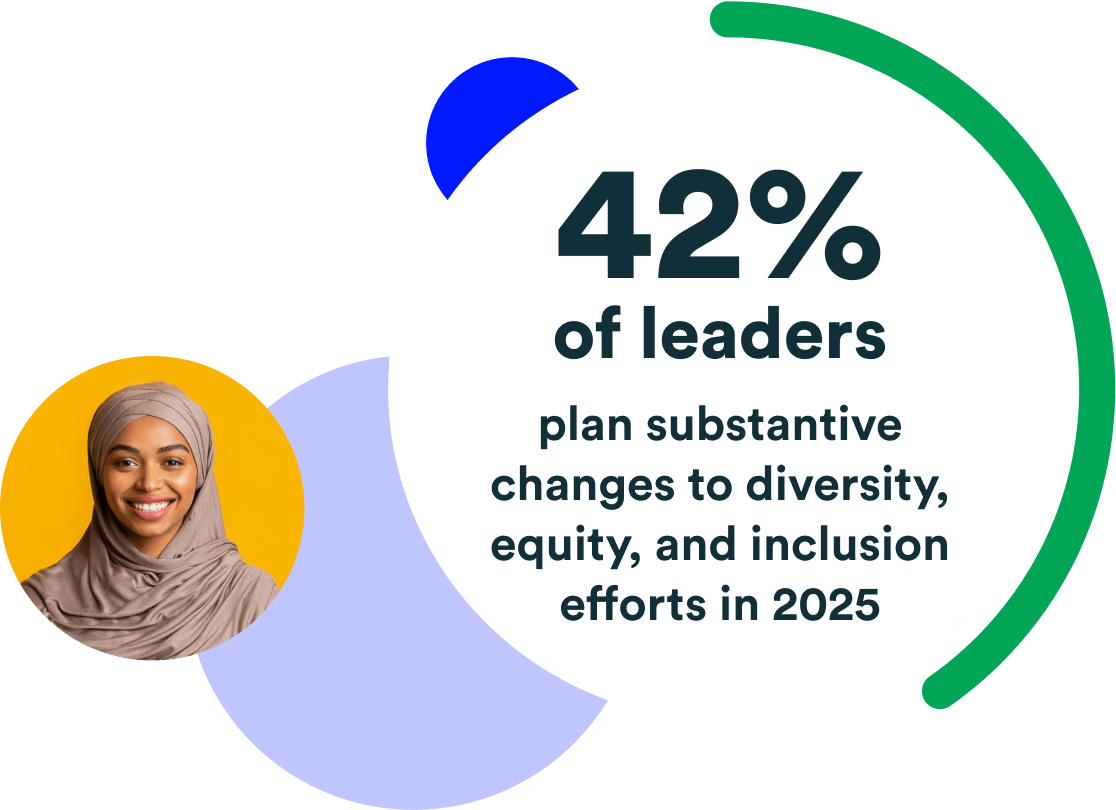
Many UK employers believe their workplaces are sufficiently inclusive, yet 59% of UK employees say their companies still have considerable work to do in advancing DEI practices. This perception gap—between leadership confidence and employee experience—signals significant problems.
Inclusion isn’t achieved through good intentions. It requires measurement, accountability, and continuous improvement. DEI survey questions help organisations understand lived experiences across different employee groups.
Myth: DEI Divides People and Creates Zero-Sum Outcomes
Critics argue that DEI creates winners and losers, pitting different groups of people against each other. This framing fundamentally misunderstands how effective DEI operates. Rather than redistributing a fixed pie, DEI expands opportunities by removing arbitrary barriers.
In 2024, the median gender pay gap for full-time employees stood at 7%. Closing this gap doesn’t disadvantage men—it corrects systematic undervaluation that hurts organisational performance.
Companies with above-average diversity on leadership teams report greater payoff from innovation and higher EBIT margins. Everyone benefits when the best talent succeeds, regardless of demographic characteristics.
Myth: Diversity Is About Race or Ethnic Identity Only
Public discourse often reduces DEI to racial diversity, obscuring its broader scope.
The Equality Act protects nine characteristics beyond race. Effective DEI also addresses socioeconomic background, neurodiversity, caring responsibilities, and veterans’ status.
Age diversity provides institutional memory alongside fresh viewpoints: neurodivergent employees often excel at pattern recognition, while people from working-class backgrounds bring different problem-solving approaches.
Myth: DEI Is Too Expensive and Doesn’t Provide ROI
Budget-conscious leaders often view DEI as a cost centre with intangible benefits.
The evidence tells a different story. Reducing the disability employment gap could add £17 billion annually to the UK economy. Diversity training represents a modest investment compared to the costs of poor hiring decisions and preventable turnover.
Myth: DEI Is Just Training or Checkbox Compliance
This misconception reduces DEI to a one-off training session.
Effective DEI requires systemic change across policies, practices, and culture. DEI training plays a role, but only when embedded in broader transformation efforts.
Meaningful progress requires leadership commitment, resource allocation, accountability mechanisms, and continuous iteration. It means examining every touchpoint in the employee lifecycle through an inclusion lens.
Why DEI Matters in the UK Workplace
DEI represents both a legal obligation and a strategic opportunity for UK employers. Let’s take a look at some of the key reasons why, and what they mean for modern HR leaders.
Equality Act 2010
The Equality Act 2010 protects people from discrimination, harassment, or victimisation in employment based on protected characteristics. The Act creates three key duties:
- Direct discrimination: Treating someone less favourably because of a protected characteristic is unlawful.
- Indirect discrimination: Policies that disadvantage people with protected characteristics require objective justification.
- Reasonable adjustments: Employers must make reasonable changes to remove barriers for disabled employees.
Non-compliance carries serious consequences, including employment tribunals, financial penalties, and reputational damage.
Gender Pay Gap Reporting
Since 2017, UK employers with 250+ employees must publish annual gender pay gap data.
Gender pay gap reporting has transformed DEI conversations. It forces transparency, creates accountability, and enables benchmarking.
For more insights, explore our DEI tip on gender pay gap reporting.
Employee Engagement Multipliers
Inclusion doesn’t just feel good—it drives measurable business outcomes. Paradigm’s research demonstrates that employees who feel they belong are 10 times more likely to be engaged.
This engagement translates directly into performance, innovation, and retention. Engaged employees demonstrate higher productivity, provide better customer service, generate more innovative ideas and stay with organisations longer.
Financial Outcomes of Diverse Teams
The business case for diversity extends beyond engagement to bottom-line performance. UK tech companies in the bottom quartile for both gender and ethnic diversity in executive teams are, on average, 66% less likely to outperform financially.
The mechanisms driving these outcomes include better decision-making, enhanced innovation, improved market understanding, and talent advantages in competitive markets.
What Good DEI Looks Like
Moving from concept to practice requires a concrete understanding of effective DEI implementation. Paradigm’s Inclusive Leadership Framework provides structure around four pillars:
- Objectivity in Processes: Removes subjective bias through standardised interviews, skills-based assessments, anonymised application review, diverse interview panels, and clear promotion criteria
- Fostering Belonging: Requires leadership modelling of inclusive behaviours, psychological safety, recognition systems, flexible working arrangements, and employee resource groups with real influence
- Amplifying Voice: Ensures diverse perspectives shape decisions through representative task forces, regular listening sessions, accessible feedback mechanisms, and transparent communication
- Supporting Growth: Provides equitable development through sponsorship programmes, transparent career pathways, skills development, fairly distributed stretch assignments, and succession planning
How Paradigm Helps Organisations Succeed With DEI
Translating DEI awareness into measurable outcomes requires expertise, data, and sustained effort. Paradigm partners with organisations to move beyond good intentions toward systematic change. Our approach combines evidence-based consulting with practical tools.
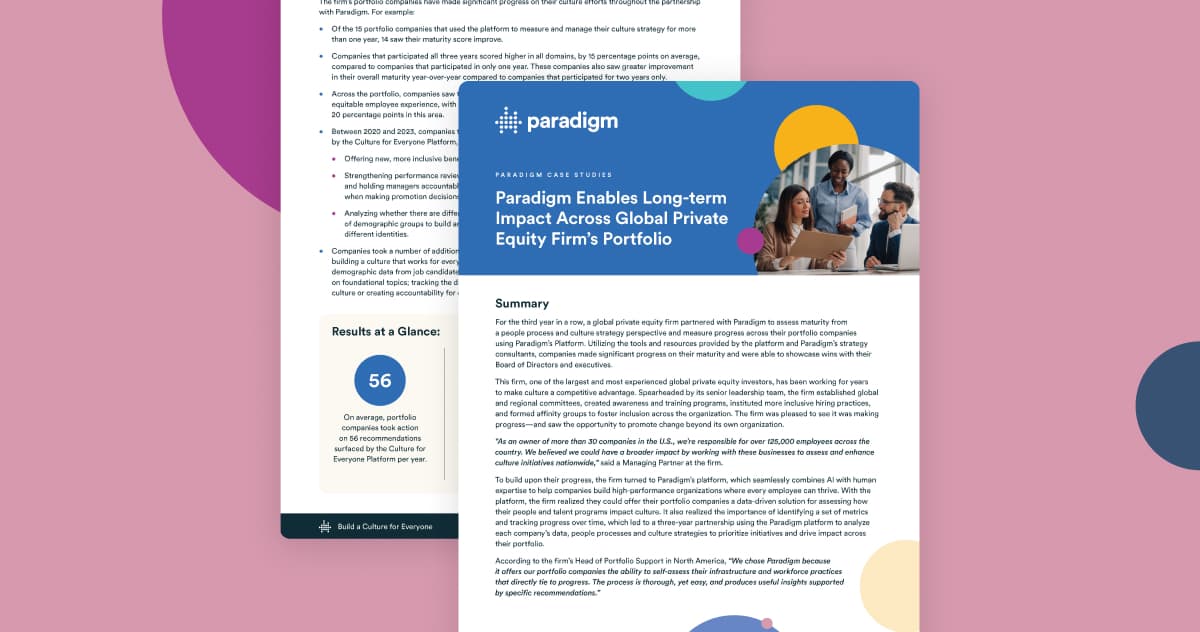
Grubhub’s partnership with Paradigm demonstrates what’s possible through comprehensive DEI transformation. Through structured analysis and targeted interventions, Grubhub achieved measurable improvements in representation, belonging, and retention.
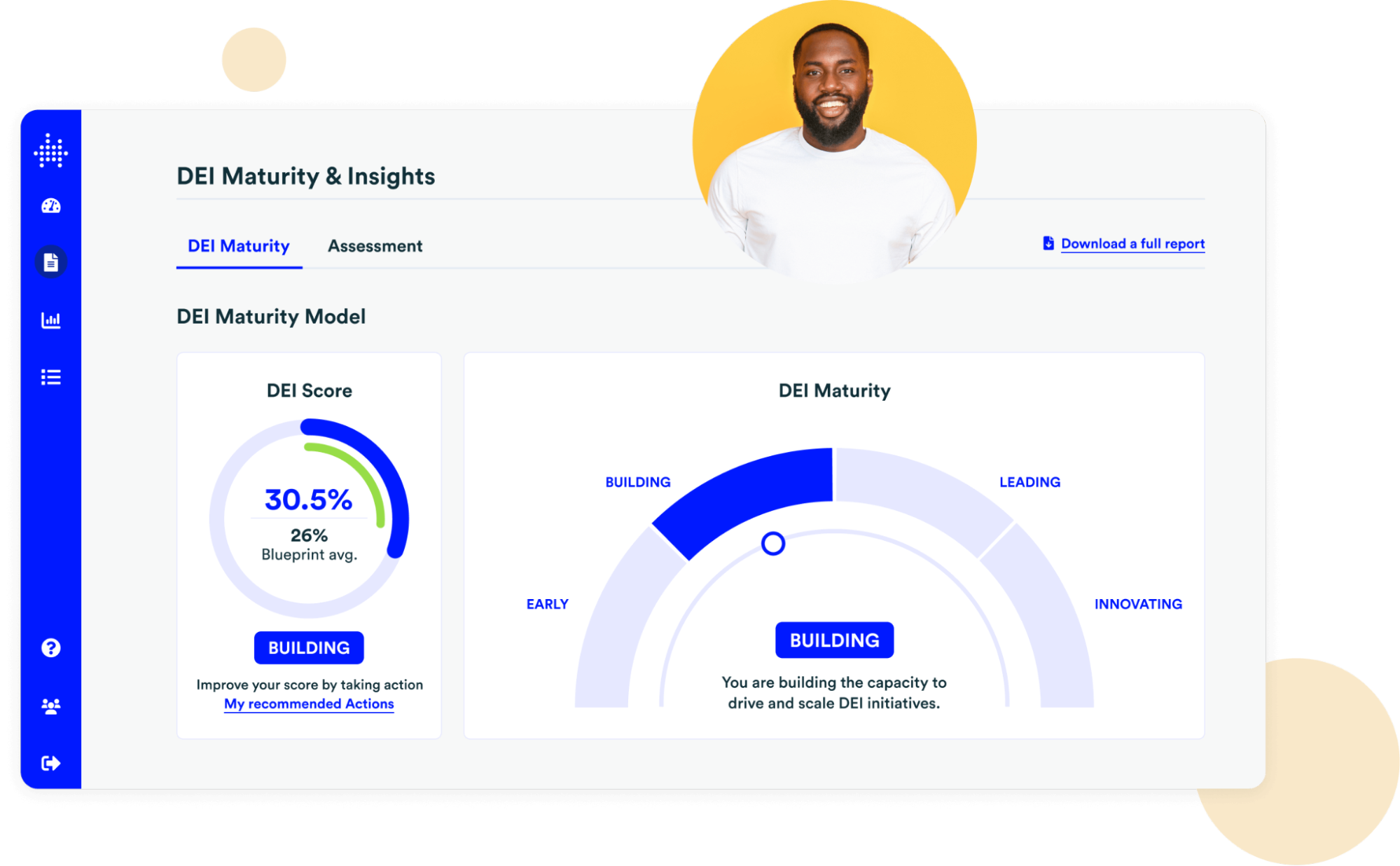
Our platform provides solutions that address DEI across the employee lifecycle, including:
- Inclusion surveys: Uncover baseline data on employee experiences, revealing gaps between policies and practice.
- Strategic consulting: Develop evidence-based DEI strategies aligned with business objectives.
- Process design: Embed objectivity into talent decisions—from continuing DEI work regardless of naming to implementing fair promotion practices.
- Training and development: Build capability across the organisation, going beyond awareness to develop practical skills.
For UK HR leaders navigating complex DEI terrain—from new EEOC guidance to President Trump’s executive orders on DEI—Paradigm provides evidence-based guidance that balances compliance, culture, and performance imperatives.
Ready to move from definitions to measurable progress? Speak with a Paradigm expert and unlock a DEI strategy that drives performance.
FAQs About the Meaning of DEI
What Does DEI Stand For?
DEI stands for diversity, equity, and inclusion. Diversity represents different identities and perspectives. Equity ensures equal access to opportunities. Inclusion creates environments where everyone can contribute fully and authentically.
What’s the Difference Between DEI and EDI or DEIB?
EDI (equality, diversity, inclusion) is UK terminology reflecting the Equality Act 2010. DEIB adds “belonging” to capture emotional experience. All three frameworks pursue similar goals—diverse representation, fair treatment, and inclusive cultures.
Why Does DEI Matter for Organisations?
DEI drives business performance through enhanced innovation, better decision-making, diverse talent attraction, and improved employee engagement. It also fulfils legal obligations under the Equality Act 2010, protecting organisations from discrimination claims.
Is DEI Only About Race or Gender?
No. Effective DEI addresses multiple diversity dimensions, including age, disability, sexual orientation, religion, neurodiversity, socioeconomic background, and thought diversity. Comprehensive approaches recognise that people hold multiple identities simultaneously.
How Do You Measure DEI Success?
DEI success requires multiple metrics: representation data across levels; pay equity analysis; employee experience surveys measuring belonging, retention, and promotion rates by demographic groups; and engagement scores. Effective measurement combines quantitative data with qualitative insights.
How Often Should Organisations Assess DEI?
Organisations should conduct comprehensive DEI assessments annually, whilst tracking key metrics quarterly. Regular measurement enables organisations to identify trends, evaluate intervention effectiveness, and adjust strategies.