

Your organization has invested in sophisticated talent management systems. You’ve implemented applicant tracking software, refined your performance management framework, and developed leadership models.
Yet core business outcomes remain stubbornly unchanged. Retention numbers haven’t improved. High-performing employees still leave. Leadership bench strength feels thin. Performance reviews happen on schedule, but employee performance doesn’t shift.
Here’s the frustrating question: “We’re doing all the right things, so why aren’t we seeing results?”
Talent management is inseparable from culture management. Most talent strategies fail because they focus on visible systems while ignoring the everyday behaviors and decision-making patterns that actually shape outcomes.
Think of it as a culture iceberg: your talent management process sits above the waterline. Below the surface, manager behaviors, fairness in daily decisions, and lived employee experience drive real results. This article offers a cohesive strategy model grounded in research from Paradigm’s Benefits of Belonging Report.
Why Traditional Talent Management Strategies Fall Short
Traditional talent management approaches prioritize tools and systems over human behavior. While technology streamlines processes, it can’t replace sound judgment or equitable decision-making. Here’s why conventional strategies struggle to deliver results.
Overreliance on Tools Without Behavior Change
Organizations invest heavily in talent management systems: HRIS platforms, performance software, and assessment tools. These streamline processes, but they can’t scale judgment.
A talent acquisition system can track every candidate, but it can’t ensure hiring managers evaluate applicants fairly. Performance management software prompts check-ins, but it can’t guarantee fair feedback. Succession planning tools identify potential successors, but they can’t prevent leaders from defaulting to people “just like them.”
Tools scale processes, not judgment. Without addressing the behaviors that drive decisions, even the best talent management framework underdelivers.
Misalignment Across the Talent Lifecycle
Too many organizations design hiring, performance management, employee development, and promotions in isolation. This creates whiplash for employees.
They’re recruited with promises of growth opportunities, then placed in teams where development isn’t prioritized. They receive feedback emphasizing innovation, then get passed over for taking risks.
When systems send mixed signals, trust erodes and top talent leaves.
When it comes to workplace inclusion, inconsistency damages credibility. Effective talent strategies require coherence across the entire employee lifecycle, from onboarding through exit.
Limited Visibility Into Fairness and Lived Experience
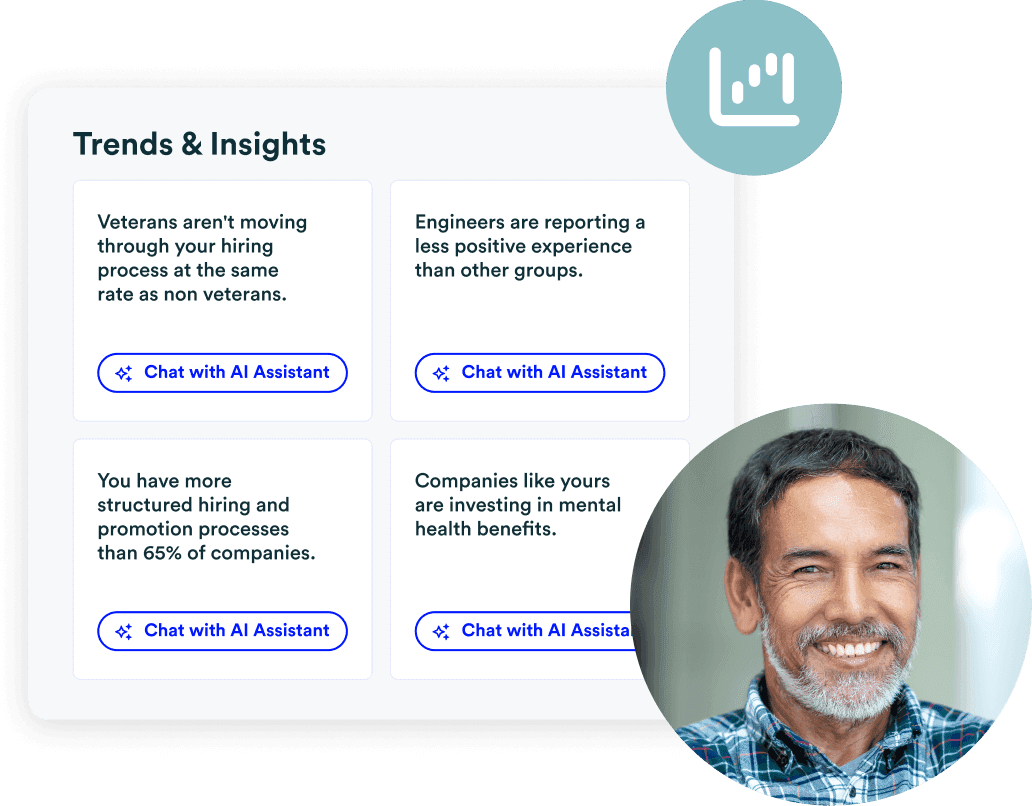
Many talent strategies rely on lagging indicators, such as attrition rates, annual engagement scores, and diversity numbers. While these matter, they only reveal problems after they’re entrenched.
Without understanding who experiences opportunity, voice, and a sense of belonging, talent strategies optimize averages rather than outcomes. Patterns only surface through employee surveys that measure experience and analytics to reveal systemic disparities.
5 Core Components of a Modern Talent Management Strategy
An effective talent management strategy requires rethinking core components. Here’s what CHROs need today, mapped to evidence-based practices that actually drive business outcomes.
1. Clear, Equitable People Processes That Support Objectivity
Objectivity isn’t just fairness—it’s a performance lever. When decisions about hiring, performance evaluation, promotions, and growth opportunities follow structured, consistent processes, better talent rises to the top.
Research from Paradigm’s Inclusive Leadership framework shows objectivity directly impacts both employee experience and business outcomes. Structured processes reduce bias, increase predictability, and improve talent decision quality.
Key practices include:
Hiring: Use standardized interview questions across all candidates. Assemble diverse interview panels representing different perspectives. Develop clear evaluation rubrics that assess your candidates against consistent criteria rather than “culture fit” or gut instinct.
Performance management: Implement calibration sessions where leaders review ratings together, ensuring consistency across teams. Separate performance conversations from compensation discussions to encourage honest developmental feedback. Track whether certain demographics consistently receive different feedback quality or frequency.
Promotions and succession planning: Establish transparent criteria for advancement at every level. Publish what competencies and achievements qualify someone for promotion. Monitor who receives high-visibility assignments and stretch opportunities that build those competencies. Address patterns where certain groups are systematically excluded from career paths.
Development: Create structured programs for high-potential talent accessible through clear nomination processes, not just manager discretion. Track participation across demographics to ensure development opportunities reach all segments of your workforce.
Organizations that embed objectivity see improved retention of top talent, reduced turnover rates, and better strategic decision-making at every organizational level.
2. Manager Capability as the Critical Multiplier
This is where most talent management frameworks fall short—they significantly undervalue the role of managers in driving talent outcomes.
Managers account for 70% of the variance in team engagement, one of the strongest drivers of employee retention. Research consistently shows that poor company leadership and dissatisfaction with managers rank among the top reasons employees leave. Yet only 35% of companies have formal succession plans, and many provide minimal training to prepare managers for their role in talent development.
Your talent strategy will only be as effective as your managers’ ability to execute it. Managers shape daily experiences of belonging, voice, and growth more than any policy or program. They determine who gets developmental assignments, who receives quality feedback, who feels valued, and who sees a path forward.
Effective talent strategies invest heavily in manager capability through four key components:
Equip with concrete skills. Move beyond diversity awareness training to behavior-based learning. Teach managers how to conduct equitable performance conversations, distribute high-visibility projects fairly, provide specific developmental feedback, and recognize their own bias in real-time decision-making.
Create accountability mechanisms. Include talent development outcomes in manager performance evaluations and compensation decisions. Track metrics like team retention, internal mobility from their teams, employee engagement scores, and direct report feedback about manager effectiveness.
Provide ongoing support. Automation and AI in HR tools can help managers access just-in-time resources when facing talent decisions. But technology supports—not replaces—sound manager judgment and relationship-building.
Model from the top. Senior leaders must demonstrate the behaviors they expect from managers. When executives prioritize talent development, invest in their own direct reports, and model inclusive decision-making, it cascades throughout the entire organization.
When you strengthen manager capability, every other component of your talent management plan becomes exponentially more effective.
3. Continuous Employee Listening, Not One-Off Surveys
Annual engagement surveys no longer provide the agility modern organizations need. The workforce, competitive landscape, and business needs change too rapidly for once-a-year check-ins to drive meaningful action.
Effective talent management requires continuous listening across multiple channels:
Inclusion surveys: Move beyond general engagement to measure whether your employees experience psychological safety, fairness in opportunity distribution, and an authentic sense of belonging.
Regular focus groups: Capture qualitative insights that quantitative surveys miss. Understand the “why” behind trends. Learn what specific experiences drive the numbers—both positive and negative.
Stay and exit interviews: Conduct stay interviews with high performers to learn what keeps them engaged before they consider leaving. Exit interviews reveal problems, but by then it’s too late. Stay interviews prevent talent loss.
HRIS and people data analytics: Analyze patterns in promotions, compensation, development program participation, assignment distribution, and career progression. Disaggregate all data by demographic, department, role level, and tenure to spot inequities that aggregate data masks.
Real-time pulse checks: Use short, frequent surveys to monitor employee sentiment during organizational change, after major initiatives launch, or when external market conditions shift.
The goal isn’t simply collecting more data, it’s unifying it to close the gap between insight and action. Too many organizations excel at measurement but fail at response because their data is fragmented across disconnected systems.
A modern intelligence platform like Paradigm’s Surface sits on top of all these listening channels. It ingests both structured data (like your HRIS records) and unstructured data (like focus group transcripts and exit interviews) into a single source of truth. Instead of leaving HR teams to manually stitch this data together, the AI-driven Surface Agent instantly surfaces hidden friction points and drafts the targeted interventions needed to improve both culture and measurable business performance.
4. A Growth Mindset Culture That Supports Adaptability
Organizations with growth mindset cultures don’t just survive disruptions—they leverage them for competitive advantage. These organizations view change as an opportunity rather than a threat, and they develop talent pools capable of meeting evolving business needs.
A growth mindset culture prioritizes:
Continuous learning: Provide diverse professional development opportunities, including formal training programs, mentoring and coaching relationships, job rotation across functions, and stretch assignments that build new skill sets. Make learning resources accessible to all employees, not just designated “high potentials.”
Psychological safety for experimentation: Create work environments where calculated risk-taking is encouraged and protected. When your employees fear failure or punishment for mistakes, innovation stalls and talent stagnates. The best learning happens at the edge of comfort zones, but only when people feel safe to venture there.
Internal mobility programs: Make it easy for employees to explore new roles, functions, and career development paths within the organization. Strong internal talent marketplaces improve your employee retention and fill skill gaps faster than external hiring.
Leadership bench strength: View every role as a leadership development opportunity. Identify high-potential employees early through data-driven assessments, not just manager intuition. Create individualized development plans that prepare them for senior positions through progressive responsibility and visibility.
Research from our Creating Cultures for Everyone guide shows that growth cultures reduce organizational risk not just during stable times, but especially during periods of market disruption, technological transformation, and economic uncertainty. When industries shift or business strategy pivots, organizations with robust internal development systems adapt faster and maintain higher employee engagement than those dependent primarily on external talent acquisition.
But to sustain this adaptability at scale, CHROs need a system that learns: an intelligence layer like Surface to continuously monitor where skills gaps exist, paired with scalable learning platforms to actively close them.
5. A Unified Intelligence Layer That Moves You From Insight to Action
Most talent strategies look great on paper but fail in execution because the underlying data is a messy reality. Important signals are fragmented across disconnected systems, with headcount in an HRIS, sentiment in engagement surveys, and the “why” behind decisions buried in unwritten cultural norms.
To build a future-ready talent strategy, CHROs need an AI-native intelligence layer purpose-built for talent and culture, like Surface. This foundational technology ties your entire strategy together by delivering:
Multi-Signal Data Unification: Surface ingests and normalizes both structured data (like your HRIS and ATS records) and unstructured data (like employee handbooks, policies, and focus group transcripts) into a single, searchable source of truth. It ensures your decisions are based on the complete picture, not just isolated snapshots.
Proprietary Industry Benchmarking: Surface pairs your unique organizational context with proprietary benchmarks built from over a decade of real-world data. This allows you to see exactly how your specific talent practices stack up against peer organizations, so you know what’s “normal, leading, or risky.”
The Power to Execute (Action Over Analytics): The AI-driven Surface Agent serves as your interface between insight and execution. Instead of just giving you a list of problems, the Agent acts as a strategic thought partner that instantly drafts targeted interventions, such as customized manager training curricula, compliant workplace policies, and data-backed executive board briefs.
By embedding a purpose-built intelligence layer into the core of your talent strategy, you stop spending weeks stitching together reports across siloed systems. Instead, talent leaders are freed up to focus on what matters most: shaping strategy, advising the CEO, and building a high-performance culture that directly drives business outcomes.
How Culture Systems Shape Talent Outcomes
This is where Paradigm’s approach diverges most sharply from traditional talent management thinking. Culture isn’t a soft, secondary concern. It’s the primary driver of talent outcomes.
Belonging Becomes a Leading Indicator
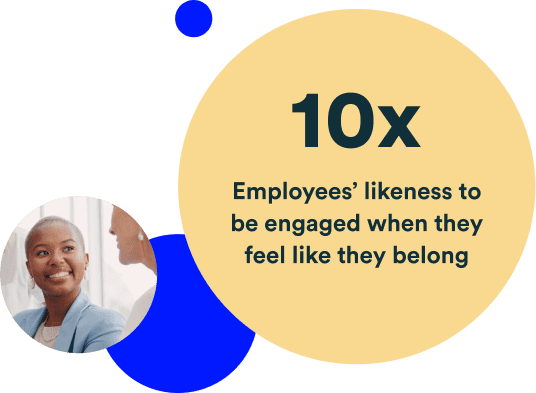
Our Benefits of Belonging research reveals that sense of belonging predicts performance:
Higher job performance
Lower employee turnover risk
Fewer sick days
Higher engagement
Improved decision-making confidence
In executive language: belonging predicts who will perform, stay, and contribute to organizational success. It’s a proven business driver affecting your bottom line.
Voice Improves Decision Quality and Leadership Pipelines
When employees feel safe to speak up, decision quality improves. This matters for innovation, risk management, and succession planning.
Traditional succession often relies on senior leader visibility. But who is not being seen? Without inclusive voice practices, leadership pipelines perpetuate existing patterns and miss high-potential talent.
Growth Mindsets Accelerate Leadership Readiness
Growth-oriented environments build bench strength faster. Feedback is developmental, failure becomes learning, and career paths allow diverse experiences. This widens the leadership pipeline.
Given that 45% of senior managers believe their organizations are unprepared for leadership vacancies, widening pipelines is essential for resilience.
Culture Maturity Shapes Strategy Effectiveness
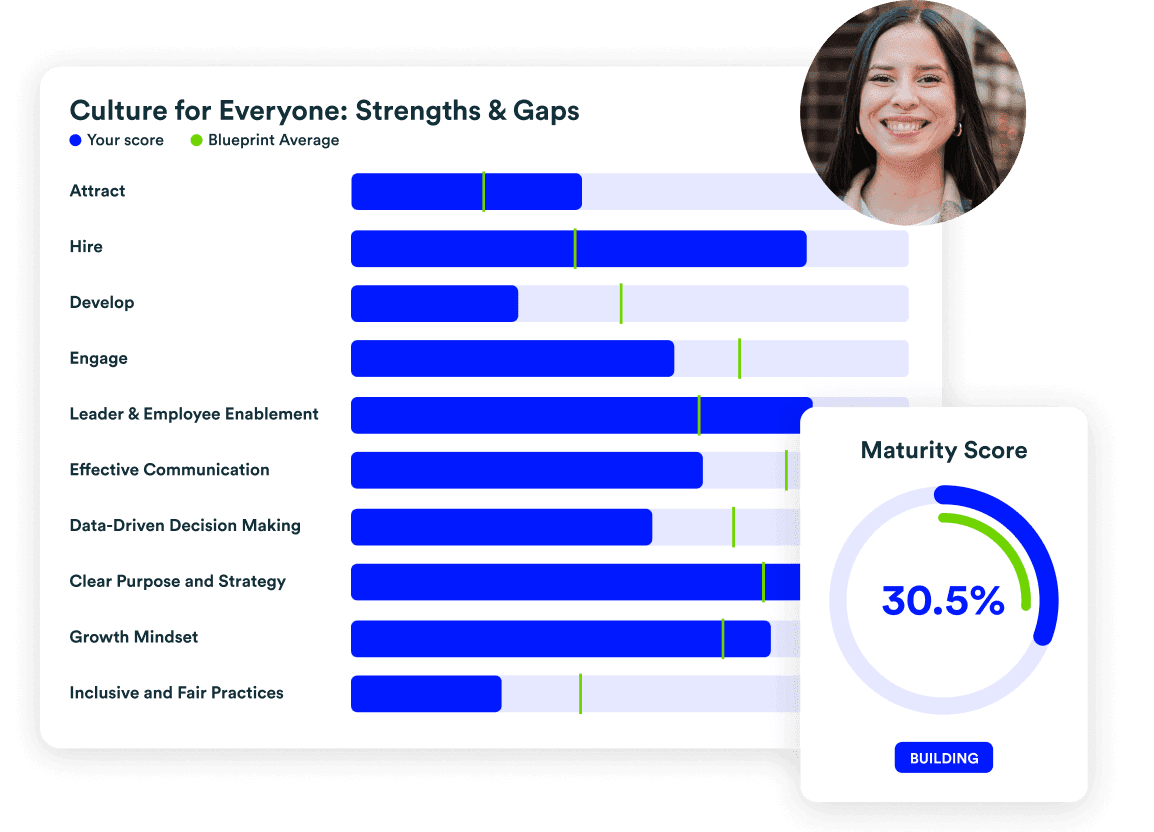
Not all organizations are ready for every initiative. Culture maturity determines which strategies will succeed. Paradigm’s Blueprint assesses culture maturity and identifies which interventions create the most impact given current readiness. Knowing where to start matters as much as what to do.
How To Build a Cohesive Talent Strategy That Drives Performance
Effective talent strategies require a systematic approach that integrates culture insights, prioritizes ruthlessly, equips managers, and measures what matters. Here’s a four-step model that works.
Step 1: Diagnose Culture and Talent Systems Together
Assess these three fundamental elements:
Systems: Audit your talent management process from hiring through exit.
Behaviors: Observe how decisions actually get made.
Lived experience: Survey employees about their actual experiences with fairness and opportunity.
Don’t audit HR systems separately from culture. They’re inseparable. And avoid diagnostic overload—instead, prioritize clarity over comprehensiveness.
Step 2: Prioritize Based on Impact and Organizational Maturity
You can’t fix everything at once. Use these criteria to sharpen your focus:
Business impact on key metrics
Culture maturity and readiness
Balance of quick wins with long-term transformation
Resource constraints and bandwidth
Inclusive talent management during uncertainty requires difficult trade-offs, and progress beats perfection.
Step 3: Equip Managers With Scalable, Behavior-Based Learning
Manager development must be behavior-based, integrated into existing workflows, reinforced by systems, and continuously refreshed.
Focus on specific, observable actions. Provide job aids and just-in-time resources. Connect to performance reviews and compensation. Use micro-learning and coaching to help your employees continue learning throughout their careers.
The Paradigm Culture for Everyone platform delivers manager development at scale, integrated with measurement systems.
Step 4: Track Progress and Adapt Using Real-Time Signals
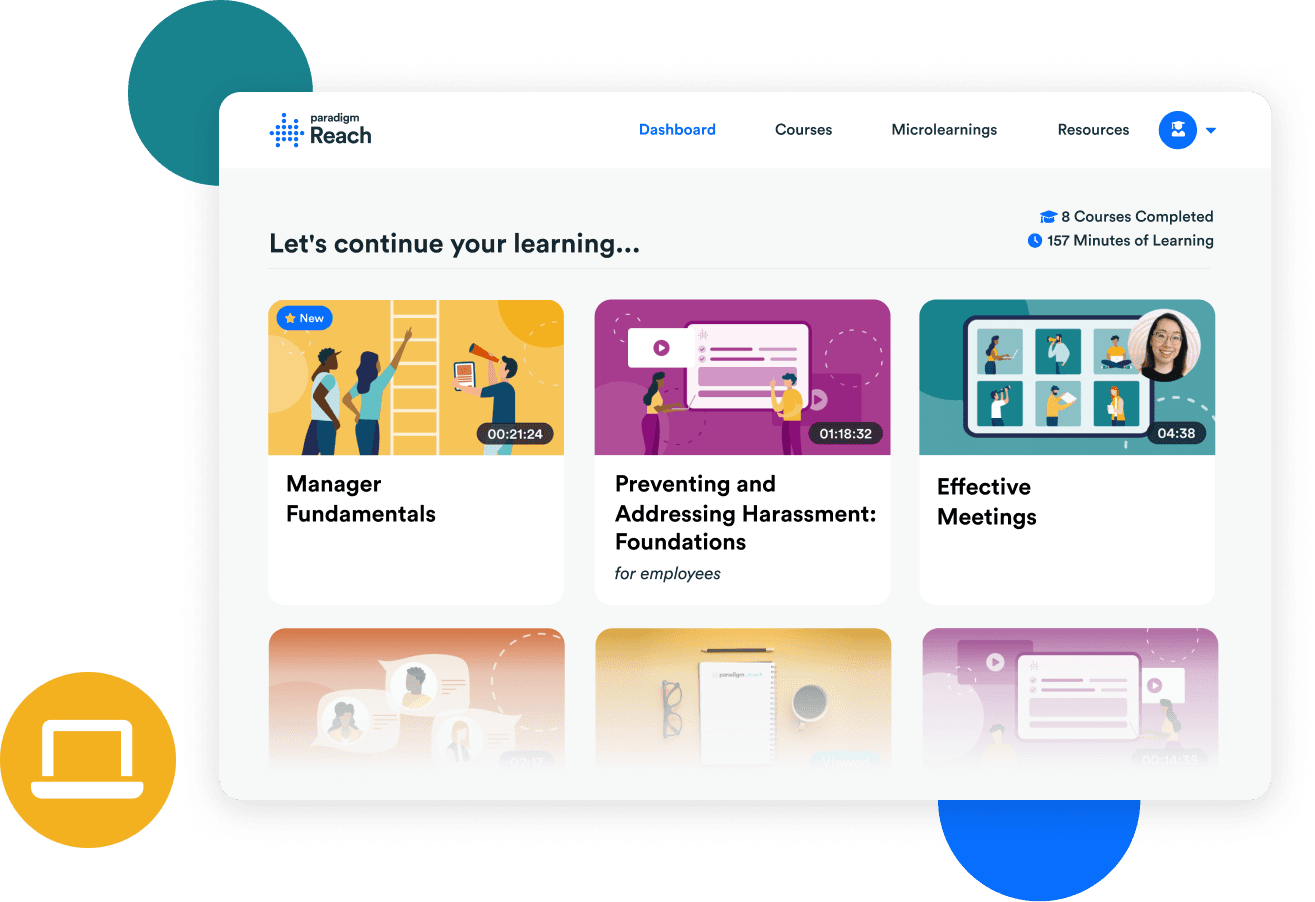
Monitor participation patterns, early retention indicators, manager behavior change, and business outcome correlations. Use Paradigm’s Reach to maintain consistent communication and reinforce change.
Adaptability is key. Markets shift, workforce expectations evolve, and your talent strategy must flex accordingly.
Talent Strategy Starts With Culture Clarity
Talent management strategies succeed when culture systems are intentional. You can have world-class technology and comprehensive programs, but if your company culture doesn’t support equitable decision-making and genuine growth opportunities, those investments underdeliver.
The most effective HR professionals recognize that talent and culture are inseparable. They don’t separate “HR strategy” from “culture work.” Every hiring decision, performance conversation, and promotion either reinforces or undermines organizational culture.
This integrated approach requires diagnosing culture and systems together, prioritizing sustainably, equipping managers with behavioral skills, measuring outcomes and experiences, and adapting continuously.
When you get this right, talent management becomes a competitive advantage. You attract and retain the best talent, your employees perform at higher levels, your leadership pipeline stays full, and your organization becomes resilient.
Ready to build a talent strategy rooted in culture clarity? See how Paradigm helps CHROs transform talent outcomes.
FAQs
How does culture influence talent outcomes?
Culture shapes talent outcomes by determining how daily decisions get made about hiring, development, promotions, and opportunities. When culture prioritizes fairness, belonging, and growth, employees perform better and stay longer.
Why do talent management strategies fail?
Talent management strategies fail because organizations focus on visible systems while ignoring behaviors and norms that drive decisions. Without manager capability, equitable processes, and culture alignment, even sophisticated tools underdeliver.
Success requires integrating talent systems with culture change, equipping managers with behavioral skills, and continuously measuring both outcomes and employee experience.

Paradigm
Paradigm helps organizations solve their hardest people and culture challenges, through expert consulting and advisory work and Surface, our talent and culture intelligence platform.
View all articles
Newsletter
Expert perspectives on workplace culture, in your inbox
Keep reading
More insights

Employee Listening & Culture Data
Manager Effectiveness: How to Diagnose Where Your Managers Are Stuck
Learn how to identify manager effectiveness gaps using connected workforce signals, before they show up as exits. A diagnostic framework for CHROs and CPOs.

Employee Listening & Culture Data
Dashboards vs. Decisions: When to Use a People Analytics Platform—and When You Need Surface
People analytics platforms show what's happening. Surface shows you what to do about it. A framework for HR leaders who need both and know the difference.

Employee Listening & Culture Data
Portfolio Intelligence: The People Metrics Private Equity Firms Should Be Monitoring
PE firms monitor financial performance across the portfolio. Most don't have the same visibility on people metrics. Here's the framework and why it matters.