

Paradigm
Paradigm’s Culture for Everyone Platform seamlessly integrates AI-enabled software with a team of experts to help companies build high-performance cultures where everyone can do their best work.
You’re under constant pressure to deliver growth: new markets, new products, tighter margins, higher expectations from your board and C-suite. At the same time, you’re facing workforce fatigue, ongoing uncertainty, and a level of skepticism about “culture initiatives” that no training can fix, especially when everyone is operating in silos.
Our research points to a consistent conclusion: organizational culture isn’t abstract. It’s a measurable performance driver that lives in your systems, leadership behaviors, and everyday decisions. If those aren’t designed for growth, no amount of messaging will compensate.
We’ll share why a true growth culture is a systems-level leadership and culture challenge—not an L&D program—and how you can start building one that scales. Along the way, you’ll see how Paradigm helps leadership teams turn this perspective into practical action.
What a Growth Culture Actually Is (and Why Most Organizations Get It Wrong)
A growth culture is a system that consistently expands your organization’s capacity—capacity for continuous learning, improvement, adapting, innovation, and performance—because everyone has the conditions to develop and contribute over time. This is characteristic of true learning organizations. It’s not a set of slogans; it’s how your structures, norms, and leadership behaviors work together.
Of course, if you ask 10 executives to define growth culture, you’ll often hear the same phrases: “fail fast,” “learning mindset,” “innovation.” Those ideas sound appealing, but they rarely describe how your organization actually operates day-to-day.
This is why so many efforts miss the mark. You’re asked to “build a growth culture,” and the default response is to launch new learning and development programs. But if the way you hire, evaluate performance, or make promotion decisions doesn’t change, your growth ambitions stay theoretical.
A scalable growth culture rests on three non-negotiable elements:
1. Belonging as a Prerequisite
People don’t stretch, experiment, or stay when they feel like outsiders. Our research shows that employees who experience a strong sense of belonging are significantly more likely to look forward to work and plan to stay long term. Without that foundation, growth becomes something a few employees enjoy while others watch from the sidelines.
2. Fair, Objective Systems
Growth stalls when access to opportunities, continuous feedback, and advancement depends on manager preference, informal networks, or “gut feel.” You need clear criteria, structured processes, and transparent decision-making so talent can grow based on contribution, not similarity to those already in power.
3. Psychological Safety and Voice
Meaningful growth also requires experimentation, and experimentation includes missteps. If employees believe that speaking up, asking questions, or naming risks will hurt them, learning shuts down. Voice isn’t just about running a survey; it’s about whether people see their input taken seriously and acted on.
When you define growth culture as a system that creates belonging, objectivity, and voice, you move from abstract aspiration to something you can actually diagnose and design.
Growth Culture vs. Performance-Obsessed Culture
One of the most common obstacles you face is a deeply ingrained belief that more pressure equals more performance, often leading to a performance-driven culture. That mindset often produces what we call a performance-obsessed culture, which looks productive on the surface but quietly erodes your capacity to grow.
In a performance-obsessed environment, results dominate everything. Speed outranks sustainability. Individual achievement matters more than how the system performs.
You may see impressive short-term metrics, yet underneath, people avoid risk, optimize for what’s rewarded today, and burn out or disengage over time.
A growth culture keeps high standards and accountability while recognizing that long-term performance and sustainable growth depend on learning, not just output.
Our research shows that belonging is directly linked to higher employee engagement, stronger performance, and better retention. Employees who feel safe, included, and fairly treated are more willing to share new ideas, flag emerging issues, and take calculated risks that lead to innovation.
The mindset shift is subtle but impactful. A performance-obsessed culture asks, “How can we squeeze more out of people?” A growth culture asks, “How can we increase our collective capacity over time?” The first approach depletes your organization, while the second compounds its strengths.
If your organization celebrates heroics instead of fixing broken systems, or prizes urgency over reflection, you may be hitting your short-term numbers while silently undermining the very growth you’re accountable for sustaining.
Why Growth Breaks Down at Scale
Even when you have the right intent, growth culture often frays as your organization scales. Early-stage organizations rely heavily on informal feedback, proximity to leaders, and relationship-based decisions. As the headcount grows, those same patterns become barriers.
The questions you need to answer objectively, like who receives stretch assignments, whose ideas reach senior leaders, or which behaviors get rewarded, often still depend on who’s already in the room.
In our Creating Cultures for Everyone research, we found that when systems aren’t explicitly designed for scale, they tend to work best for people who match the dominant profile in your leadership ranks. Growth opportunities cluster around those individuals, reinforcing sameness and limiting the range of perspectives that shape your strategy.
This is why most well-intentioned efforts struggle. You invest in mentorship programs, learning platforms, and “growth mindset” training, alongside various other methodologies. But if promotions still favor those closest to power, if feedback quality varies wildly by manager, or if psychological safety exists only on certain teams, your culture still works for some more than others.
Equitable growth at scale requires fair, transparent systems that don’t depend on informal access. Your opportunity is to treat scale not just as an operational objective, but as a culture design challenge that requires you to revisit how decisions are made, how leaders are evaluated, and how opportunity flows.
The Culture Iceberg: Why Growth Culture Lives Below the Surface
Growth culture work starts by understanding that most of what matters isn’t always readily visible. We illustrate this as a culture “iceberg,” where the true drivers of culture growth sit below the surface.
Above the Surface: Visible Signals
At the top of the iceberg are the metrics and artifacts you already track:
- Engagement survey and pulse check results
- Promotion and attrition rates
- Representation data
- Innovation metrics
- Qualitative feedback from listening sessions
These tell you what employees are experiencing and how your organization is performing today—but they’re lagging. By the time your engagement scores drop or regretted attrition rises, the underlying issues have been shaping daily experience for months or years.
Below the Surface: The Real Drivers of Growth
Under the water sit the systems and norms that decide whether your growth culture is real or rhetorical:
- Decision-making processes: Whose input shapes key decisions? Are the criteria explicit, or do choices depend on informal networks and unspoken rules?
- Performance systems: Do your evaluation tools recognize learning, collaboration, and intelligent risk-taking, or do they reward only short-term outputs and visible wins?
- Leadership behaviors: Do leaders share what they’re learning, admit what they don’t know, and invite challenge, or do they send the message that mistakes are career-limiting?
- Access to opportunity: Are high-visibility projects, international assignments, or leadership programs distributed equitably, or do they go to the same profiles repeatedly?
These below-the-surface elements determine whether employees feel they belong, trust the system, and see a future for themselves with you. Effective growth culture strategies start with an honest diagnosis of what’s below the surface, not with another program at the surface level.
Culture Metrics Alone Don’t Create Growth
You likely have more culture data than ever. Yet you may still struggle to point to clear connections between all that measurement and better growth outcomes.
Metrics are essential, but they tell you where friction exists, not how to remove it. A low belonging score highlights a problem. It doesn’t explain which processes are driving that experience, what leadership behaviors are reinforcing it, or what changes would make the biggest difference.
As your organization grows, this gap between insight and action widens. The data might show that employees with certain backgrounds experience less access to advancement, and shifting that pattern requires changes to hiring criteria, performance reviews, promotion processes, and leadership accountability.
This is where many culture growth efforts stall. You run the survey, share the findings, and perhaps set team-level action plans. Then execution defaults to training or communication campaigns that leave underlying systems intact. You end up measuring the same issues year after year.
To turn metrics into a true growth lever, you need three components working together:
- Data that reveals patterns
- Leadership insight that interprets those patterns in context
- Systems redesign that targets root causes instead of symptoms
Organizations that build growth culture don’t collect more data; they use existing data to make bolder, more structural changes.
How To Move From Culture Programs to Culture Systems
A growth culture has to be wired into how your organization runs. It shows up in the criteria you use to hire and promote, the trade-offs leaders make under pressure, the behaviors that earn recognition, and the accountability mechanisms you put in place.
Shifting from programs to systems means treating culture as a strategic business lever, not a side project for HR. It requires you to map how talent moves through your organization, where decisions concentrate, and which incentives truly drive behavior.
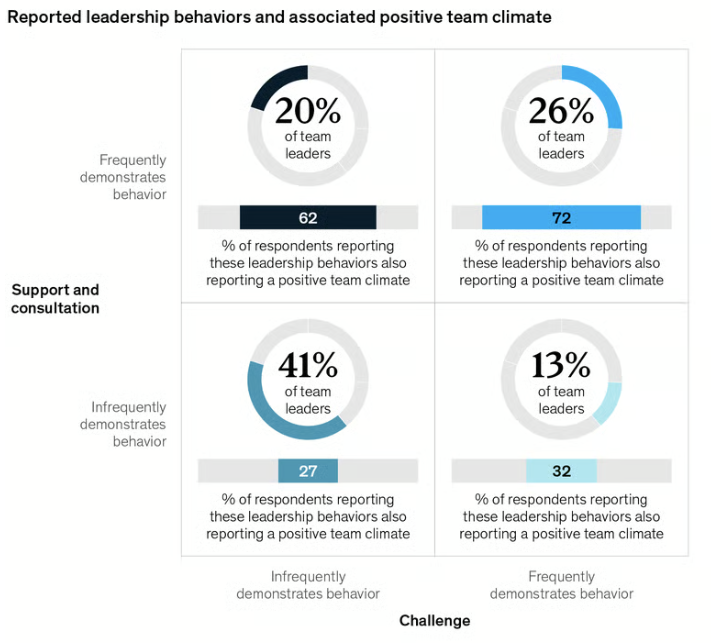
From there, you can embed growth culture into core people systems:
- Hiring: Incorporate structured interviews and clear criteria that assess for learning orientation and inclusive behaviors, not just technical skills or “culture fit.”
- Performance management: Design evaluation frameworks that recognize development, collaboration, and knowledge-sharing alongside results, so employees are rewarded for building capacity, not just delivering outputs.
- Leadership development: Equip leaders with practical skills to create psychological safety, give effective feedback, and model vulnerability and curiosity.
- Promotion and rewards: Define advancement criteria that value how leaders grow others and improve systems, not only their individual achievements.
When these systems reinforce each other, culture becomes more stable.
Learning opportunity: Paradigm’s Leading Cultures of Growth workshop focuses on equipping leaders with skills to create psychological safety, share effective feedback, and build inclusive teams.
Growth Culture Helps High-Performance Organizations Endure
High performance is only valuable if you can sustain it.
Many organizations can produce a year or two of strong results by pushing harder or turning up the pressure. Fewer can maintain that trajectory without eroding trust, burning out key talent, or narrowing the range of people who can succeed.
A genuine growth culture changes that equation. When you embed growth into your systems, you create an environment where high performance is renewable rather than extractive. Our research points to three features that make growth cultures durable:
- Belonging as infrastructure: Belonging isn’t a “feel-good” outcome; it’s the foundation for performance at scale. Fair, objective systems that provide meaningful voice and equal access to opportunity allow a wider range of employees to contribute at their highest levels over time.
- Leadership behaviors that scale: Growth cultures aren’t sustained by a few exceptional leaders. They rely on consistent behaviors across your leadership population, such as curiosity, accountability, openness to feedback, and visible learning, reinforced through clear expectations and consequences.
- Systems that reinforce growth: Hiring, performance, promotions, and development all send a consistent signal that learning, collaboration, and improvement matter. Over time, those signals shape norms more powerfully than any campaign.
In organizations like this, teams respond to disruption by acting quickly and thoughtfully. Employees know how decisions get made, trust that the system is broadly fair, and feel confident that raising concerns or ideas contributes to progress instead of putting them at risk.
If you’re ready to move beyond short-lived programs and build a growth culture that can carry your organization through its next phase of strategy and scale, you don’t have to do it alone. The Paradigm consulting team partners with CHROs and executive teams to design culture strategies, systems, and leadership enablement that align with business priorities and produce outcomes you can measure over time.