Paradigm
Paradigm’s Culture for Everyone Platform seamlessly integrates AI-enabled software with a team of experts to help companies build high-performance cultures where everyone can do their best work.
HR and people leaders are currently at a crossroads. On one hand, there’s more employee data than ever before:
- Engagement surveys
- Inclusion surveys
- Employee lifecycle feedback
- Human resources information systems (HRIS) data
- Performance metrics
- Exit interviews
- Listening tools that promise constant insight
On the other hand, there’s often less clarity about which levers actually improve the employee experience at scale and which actions will meaningfully move culture and performance forward.
The challenge isn’t a lack of care, effort, or intent. Most organizations are deeply invested in improving how work feels for their people. The real issue is system-level misalignment between culture aspirations, manager behaviors, and the processes that shape employees’ day-to-day reality. When those systems are out of sync, even well-designed employee experience initiatives struggle to create lasting impact.
Culture is not a “soft” initiative. It’s a performance driver and a business necessity. Research consistently shows that employee experience affects retention, productivity, innovation, and well-being. Organizations that treat experience as an outlier or symbolic leave performance on the table.
Effective employee experience management requires clarity, prioritization, and sustained behavior change. It’s not about adding more programs or tools. It’s about designing systems that consistently reinforce the behaviors and experiences you want people to have every day, across teams, roles, and identities.
What Employee Experience Management Means Today
Employee experience management (EXM) has evolved far beyond pulse surveys or point-in-time feedback. It’s the practice of intentionally designing, measuring, and improving the systems that shape how employees experience work across the entire employee journey, from onboarding new hires to offboarding tenured team members.
Modern EXM recognizes that work experiences are cumulative. They’re shaped by:
- How decisions are made
- How managers interact with their teams
- How career development opportunities are distributed
- How safe people feel speaking up
These moments add up to determine whether employees feel valued, motivated, and able to do their best work.
Today, employee experience is directly tied to outcomes leaders and stakeholders care about most: retention rates, productivity, employee well-being, and performance. U.S. workers are 68% less likely to consider leaving their jobs when they have a positive employee experience. A great employee experience is also linked to higher job satisfaction and decreased turnover.
When experience breaks down, organizations see higher attrition, lower engagement, increased burnout, and diminished trust. When experience is intentionally designed and reinforced, those outcomes improve, often dramatically.
This is a departure from outdated views of EXM, which treated it as:
- An annual employee engagement survey with limited follow-through
- A collection of perks, wellness programs, or office upgrades
- Another HR platform layered on top of existing systems
True EXM is not episodic or transactional. It’s strategic, continuous, transformational, and behavior-driven.
How Employee Experience Has Evolved Beyond Management
Workforce expectations have fundamentally shifted. Hybrid and remote work have changed how people connect and collaborate. Employees expect transparency in decisions that affect them alongside values like belonging, flexibility, and fairness.
When people feel a strong sense of belonging, performance, engagement, and retention improve dramatically. Belonging influences whether employees bring forward ideas, take smart risks, and stay through periods of change. It’s a powerful predictor of discretionary effort.
As a result, employee experience strategy has moved from managing sentiment to designing systems. Instead of asking, “How do employees feel right now?” leading organizations ask, “What systems, behaviors, and processes are consistently shaping that experience, and are they aligned with our values and goals?”
Core Elements That Shape Daily Experience
Employee experience becomes actionable when it’s grounded in tangible, observable drivers—the ones that fall below the surface of what we call the “culture iceberg.” Across organizations, a few core elements consistently shape how day-to-day work feels:
- Clarity around expectations, decision-making, and priorities
- Growth opportunities that feel accessible and fair
- Inclusion and belonging across identities, roles, and teams
- Manager behaviors that influence trust, feedback, and employee development
- Objective, fair processes that build credibility over time
These elements are not abstract. They show up in meetings, performance reviews, the new employee onboarding process, hiring decisions, promotion conversations, and everyday interactions.
The Gaps Most Organizations Face With Employee Experience
Despite good intentions, many organizations struggle to translate employee experience solutions into meaningful change. Competitors often focus on surface-level symptoms while missing the underlying barriers.
The central barrier is not a lack of data. It’s too much data without clear action.
Fragmented Data Across Surveys, HRIS, and Feedback Channels
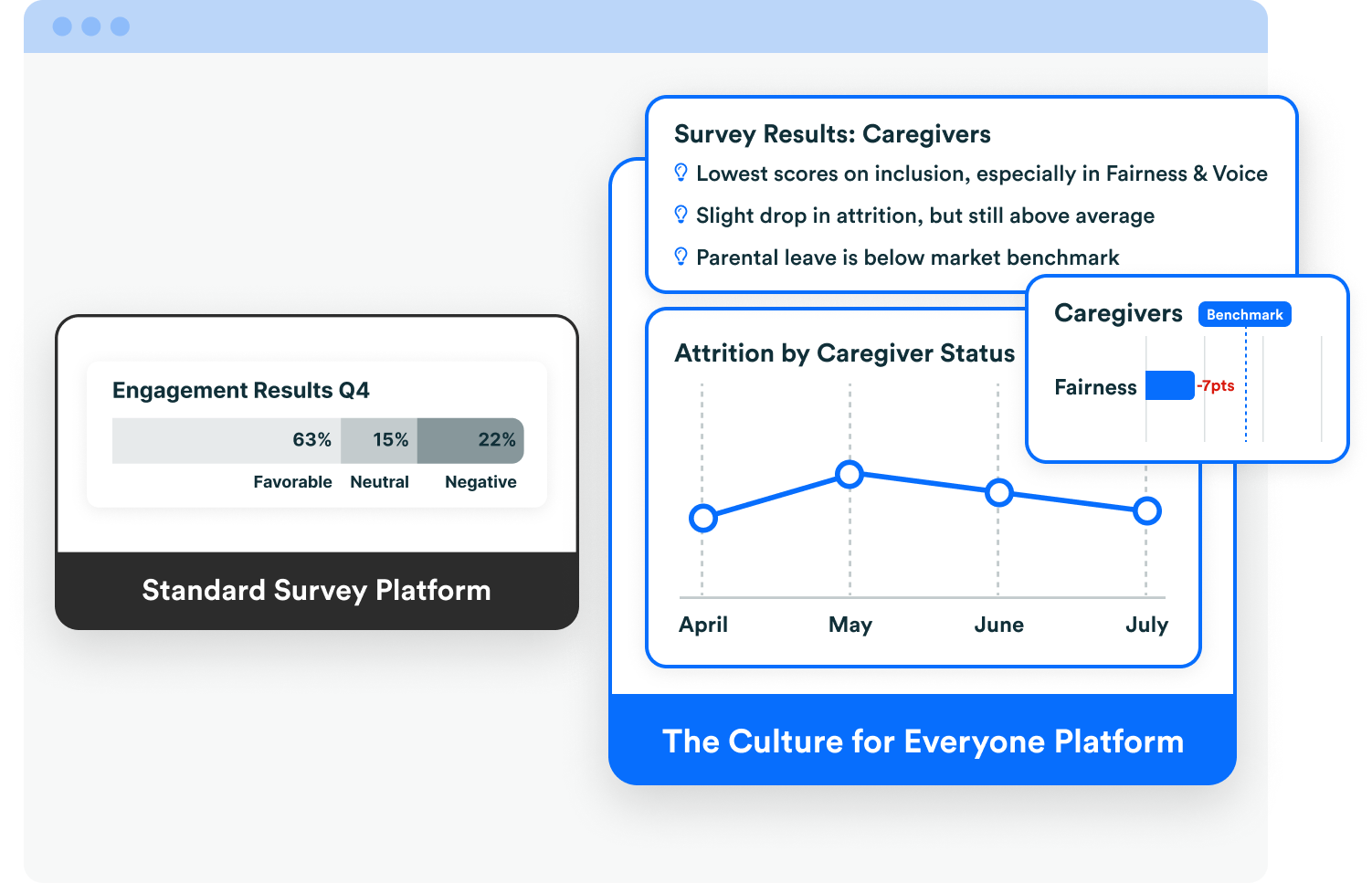
Most organizations collect employee data across multiple systems, such as employee surveys, HRIS platforms, exit interviews, performance tools, and ad hoc employee feedback channels. Each source offers a piece of the puzzle, but rarely are they integrated in a way that creates clarity.
As a result, HR teams are left trying to connect engagement scores to attrition trends, inclusion signals to manager effectiveness, and performance outcomes to employee sentiment. The volume of data creates noise rather than focus.
Without synthesis and prioritization, data becomes descriptive rather than actionable. Leaders know what is happening, but not why, or what to do next.
Misalignment Between Leaders’ Intentions and Lived Experience
Another common gap is the disconnect between what leaders say matters and what employees experience daily. Organizations often articulate strong values around inclusion, growth, and transparency, yet employees encounter systems and behaviors that contradict those commitments.
Misalignment shows up when:
- Informal norms override formal values.
- Decision-making lacks transparency despite stated commitments.
- Performance and promotion processes feel subjective or inconsistent.
These experience gaps quietly erode trust. Employees pay closer attention to what actually happens than to what is communicated.
Training Without Sustained Behavior Change
Many organizations respond to overall employee experience challenges with training, which is often well-designed, research-backed, and thoughtfully delivered. But without reinforcement, training alone rarely changes behavior.
Leaders don’t need more information, they need support for shifting habits. Employee experience improves when learning is applied in context, reinforced over time, and embedded into daily workflows. One-off workshops cannot compete with years of ingrained behaviors and incentives.
Research-Backed Drivers of Exceptional Employee Experience
Paradigm’s approach to employee experience is grounded in its Inclusive Leadership Framework, which identifies the core drivers that consistently shape how people experience work environments. These drivers are not theoretical. They’re backed by research and validated across industries.
The framework centers on four key drivers: belonging, objectivity, voice, and growth.
Belonging as a Multiplier of Engagement and Performance
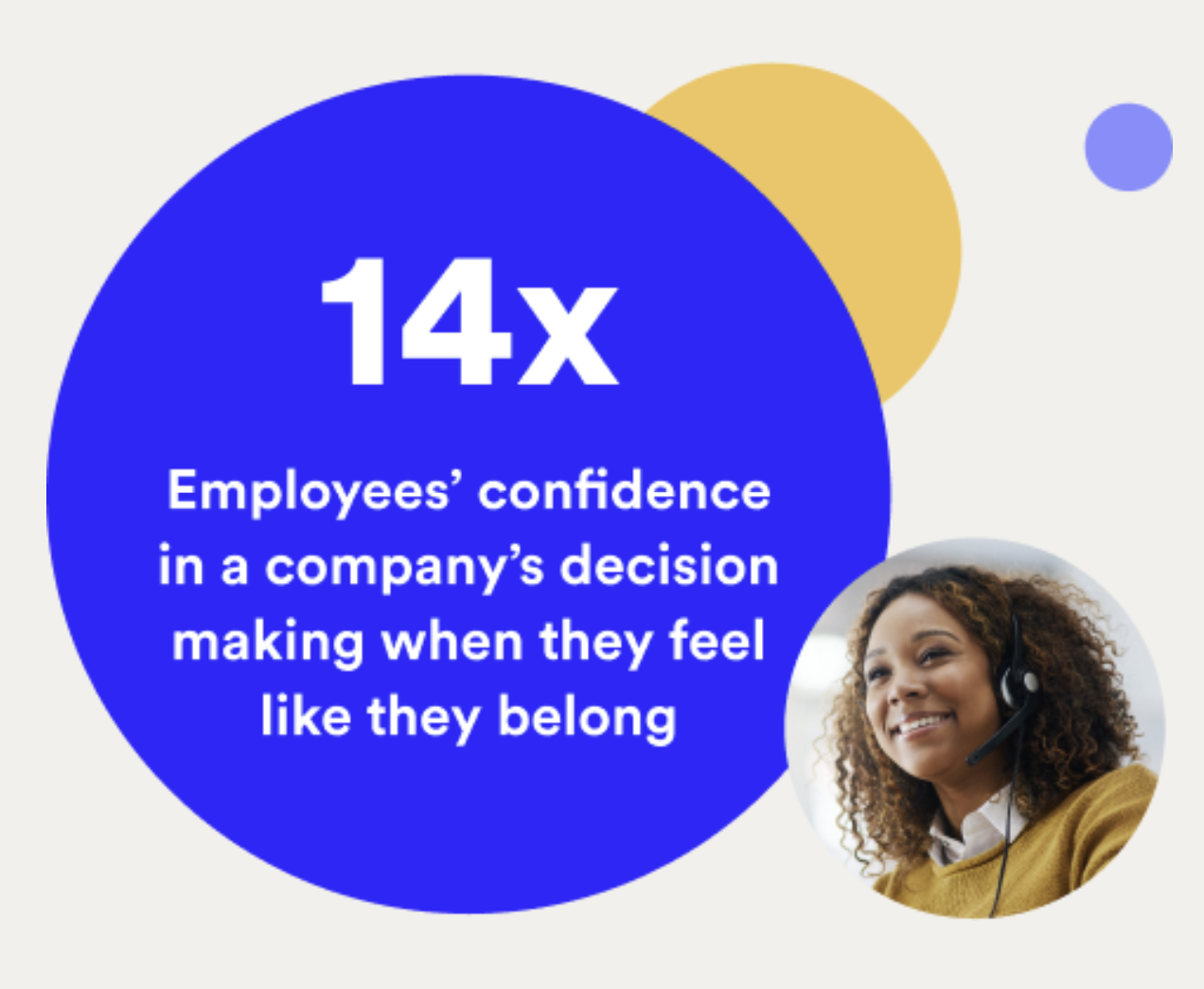
Belonging is one of the strongest predictors of engagement and performance. According to Paradigm’s Benefits of Belonging report, employees who feel a strong sense of belonging are 10 times more engaged than those who do not. They’re also 14 times more likely to have confidence in their organization’s decisions.
Belonging is linked to higher employee retention, better collaboration, improved well-being, and greater resilience during change. It’s not an outcome of culture messaging but of systems and behaviors, such as how managers run meetings, how decisions are communicated, and how employee recognition is given.
When organizations design for belonging, they unlock performance at scale.
Objective, Fair Processes That Optimize Trust and Clarity
Employee experience is deeply influenced by perceptions of fairness. When hiring, performance, and promotion decisions feel subjective or biased, trust erodes, even among those who benefit from the system.
Objectivity reduces friction, disengagement, and attrition by creating clarity around how decisions are made. Fair, consistent processes help employees understand what success looks like and how to grow. Over time, this consistency strengthens confidence in leadership and the organization as a whole.
Manager Behaviors That Consistently Shape Daily Experience
Managers are one of the most powerful levers in employee satisfaction. They shape employee needs like psychological safety, influence access to growth opportunities, and determine whether feedback feels supportive or threatening.
Employee experience improves when managers are equipped with:
- Clear expectations for inclusive, effective leadership
- Practical tools they can apply immediately
- Reinforcement that sustains behavior change over time
When managers are supported, experience becomes more consistent, regardless of team, location, or role.
Voice and Psychological Safety as Predictors of Innovation
Organizations that want innovation must prioritize voice. Employees are more engaged and more likely to contribute ideas when they feel safe speaking up, especially when offering dissenting perspectives.
According to BCG, employees who experience psychological safety at work are more likely to view mistakes and failure as growth opportunities. They’re also more likely to challenge the status quo.
When systems unintentionally silence voices through hierarchy, unclear decision-making, or lack of follow-through, organizations miss critical insights and slow innovation.
Culture systems should actively reinforce employee voice rather than rely on individual courage alone.
How to Build an EX Strategy That Actually Improves Culture
For HR leaders, the question is not whether employee experience matters—it’s how to operationalize it in a way that creates real change. Paradigm’s approach follows a clear, practical model: Get Insight → Take Action → Enable People → Track Progress.
Get Insight: Identify Root-Cause Company Culture Challenges
Effective strategies start with understanding why experience gaps exist. Inclusion surveys and focus groups go beyond surface metrics to uncover root causes. When quantitative data is paired with qualitative insight, patterns become clear.
The goal is not to measure everything, but to identify the few drivers that matter most. Insight should lead directly to prioritization, not analysis paralysis.
Take Action: Prioritize Impact and Clear Ownership
Not every issue can be tackled at once. In effective employee experience management, prioritization creates momentum by focusing resources where they will have the greatest impact. Clear ownership ensures accountability and progress.
When leaders know who owns what (and why), it becomes easier to sustain change and communicate progress credibly.
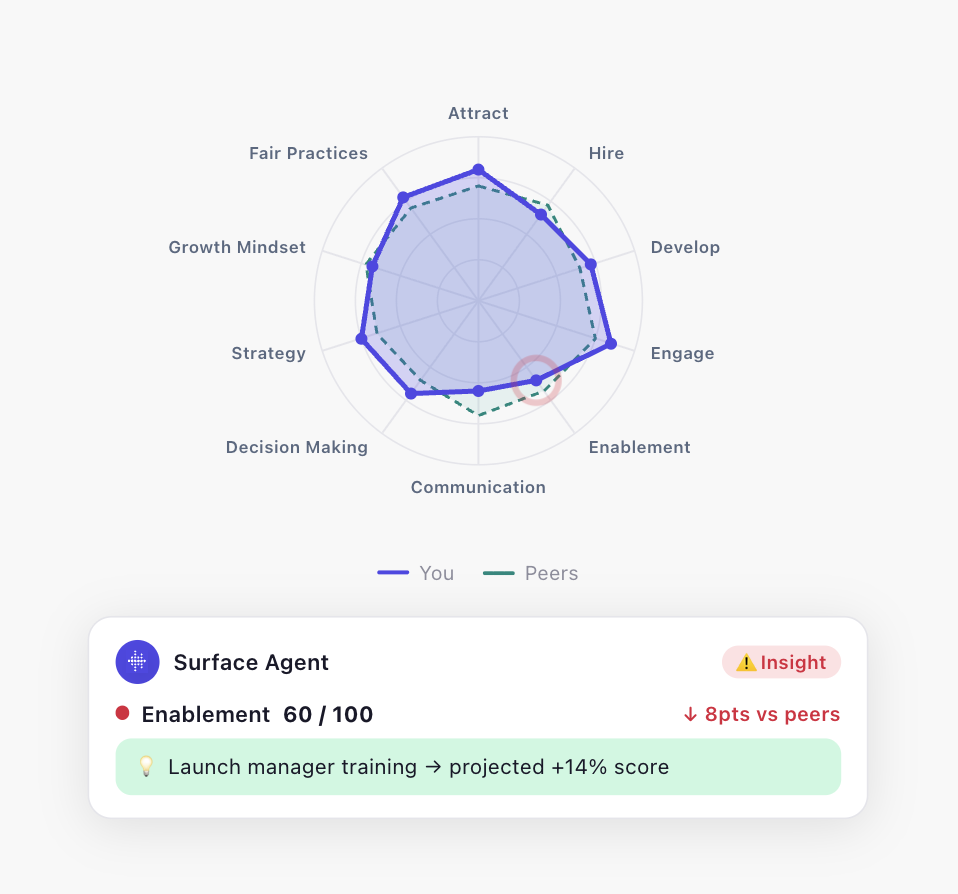
Instead of leaving HR teams to figure out these priorities manually, an AI-native intelligence platform like Paradigm’s Surface continuously uncovers critical hotspots and priority opportunities across your organization. By leveraging the AI-driven Surface Agent, talent leaders can move from insight directly to execution.
The Agent evaluates your unique organizational data and peer benchmarks to instantly produce a targeted, prioritized action plan, ensuring your team spends less time on manual analysis and more time driving real cultural impact alongside human experts.
Not every issue can be tackled at once. Prioritization creates momentum by focusing resources where they will have the greatest impact. Clear ownership ensures accountability and progress.
When leaders know who owns what (and why), it becomes easier to sustain change and communicate progress credibly.
Tools like Blueprint are designed to help you turn data into impact with real-time guidance from AI assistants and human experts.
Enable People: Develop Manager Capability
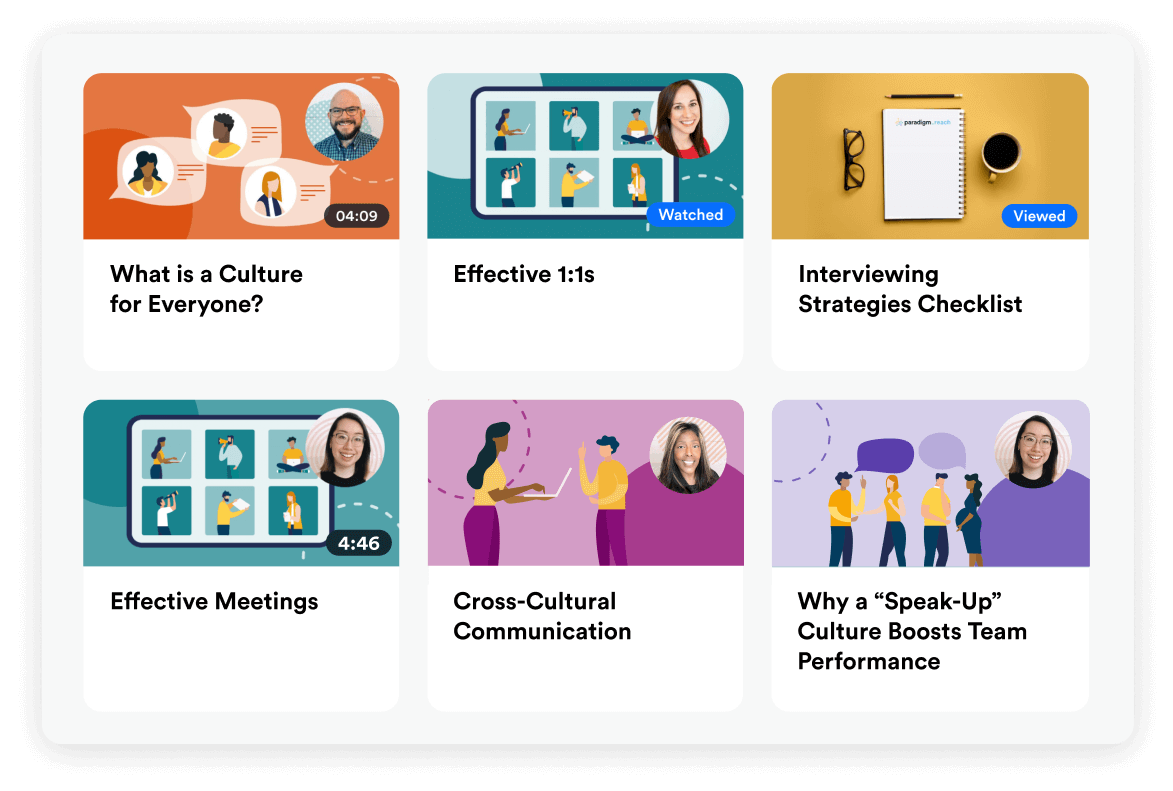
Employee experience lives in daily interactions, which makes manager capability essential. Paradigm’s user-friendly learning experiences through Reach are designed to drive sustained behavior change by embedding learning into workflows, reinforcing it over time, and focusing on habit formation, not just awareness.
When managers are enabled, employee experience improves organically and consistently.
Track Progress: Monitor Continuously Rather Than Annually
Workplace culture and experience are dynamic. Annual measurement alone cannot capture shifts or enable timely course correction. Continuous measurement supports better decision-making, clearer progress stories, and stronger executive alignment.
Tracking progress over time also reinforces accountability and keeps experience work connected to business outcomes.
Build the Employee Experience That Fuels High Performance
Employee experience management is not a collection of programs, it’s a strategic system. Organizations that design that system intentionally see greater consistency, stronger belonging, and measurable performance gains.
For HR leaders, the opportunity is to move beyond fragmented data and disconnected initiatives toward an integrated approach that aligns insight, action, and enablement.
To learn how Paradigm’s actionable insights and learning experiences can help you build an employee experience that drives measurable performance, explore the Culture for Everyone platform and connect with our sales team to see what’s possible when culture systems truly work together.
Frequently Asked Questions (FAQs)
How does employee experience affect performance and retention?
Employee experience directly influences how engaged, productive, and committed employees are at work. When employees feel a sense of belonging, fairness, growth, and psychological safety, they’re significantly more engaged and far more likely to stay.
Poor employee experience—driven by unclear expectations, inconsistent management, or unfair processes—leads to disengagement, burnout, and higher attrition, which negatively impacts performance management and business results.
What tools help organizations manage employee experience?
The most effective employee experience management tools combine inclusion and engagement surveys, qualitative insights like focus groups, people analytics, and learning solutions that enable behavior change, especially for managers. Integrated platforms that connect insight to action help organizations prioritize the right levers, track progress over time, and embed employee experience improvements into daily work.
What role do managers play in employee experience?
Managers are one of the strongest drivers of employee experience. They shape daily interactions that affect belonging, psychological safety, feedback quality, and access to growth opportunities. When managers are equipped with clear expectations, practical tools, and sustained learning support, employee experience becomes more consistent and inclusive, leading to higher engagement, stronger performance, and improved retention.