Our website uses cookies to distinguish you from other users of our website. This helps us to provide you with a good experience when you browse our website and also allows us to
improve our site. By continuing to browse our website, you’re agreeing to our use of cookies. For more information, please read our
Our website uses cookies to distinguish you from other users of our website. This helps us to provide you with a good experience when you browse our website and also allows us to
improve our site. By continuing to browse our website, you’re agreeing to our use of cookies. For more information, please read our


Paradigm
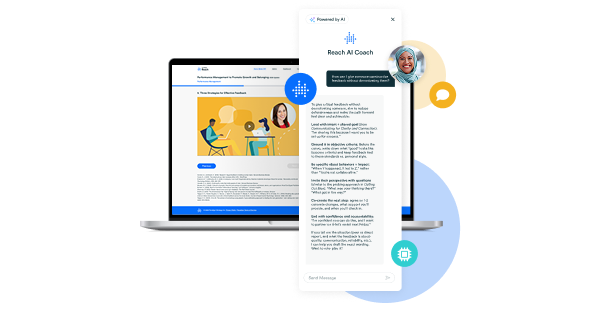
Paradigm’s Culture for Everyone Platform seamlessly integrates AI-enabled software with a team of experts to help companies build high-performance cultures where everyone can do their best work.
The most forward-thinking companies aren’t just training leaders to manage. They’re training them to lead inclusively, because inclusion drives performance, retention, and innovation.
Inclusive leadership strengthens your culture, motivates and engages employees, and gets you closer to your goals. The problem? Leadership built for everyone doesn’t happen on its own or with only good intentions. It’s a developed strategy that requires a proactive approach.
Traditional leadership development styles often fail to embed inclusion, fairness, and measurable impact, but that doesn’t have to be your case. Let’s explore how today’s leadership development strategies change the narrative—from employees feeling burned out or like their voice doesn’t matter, to trusting and enjoying their workplaces, leading to higher performance and innovation.
Inclusive Leadership Drives Business Outcomes
High-performing teams don’t just have capable managers, they have inclusive leaders.
Successful inclusive leadership development offers a direct return on investment (ROI) for businesses, making it a must-have strategy for driving growth. Organizations with a culture for everyone see results like the following:
- Employee engagement: Leaders who foster an inclusive environment can enhance employee engagement by cultivating trust and respect. Employees are 10x more likely to engage when they feel they belong.
- Employee retention: Supervisors who implement inclusive leadership can help reduce voluntary turnover risk by up to 50%, according to the Creating Cultures for Everyone report, and keep employees longer.
- Increased innovation: Managers who build work environments with high psychological safety and inclusion can expect more ideas, greater productive risk-taking, better problem-solving, and stronger team collaboration. According to APA’s Psychological Safety in the Changing Workplace, 95% of employees feel a higher sense of safety because they feel their culture encourages teamwork and collaboration, and 96% say their company fosters positive co-worker relationships.
- Stronger performance: According to Creating Cultures for Everyone, leaders who practice inclusive management can improve operational performance by as much as 56% and strengthen their business’s bottom line.
These key reasons are why, according to our 2025 Benchmarking Study, 90% of companies provide management enablement training.
How Inclusive Leaders Are Made
Training is essential because leadership isn’t an innate trait, and inclusive leadership certainly isn’t.
Inclusive leadership is a skill shaped by the support we receive, organizational systems, and a culture that rewards equity—not just good intentions.
A healthy leadership development program prompts managers to celebrate where they’re doing well while reflecting on where they can improve. It then gives them the support to take action—whether that’s via training, coaching, or other resources—to build an inclusive culture.
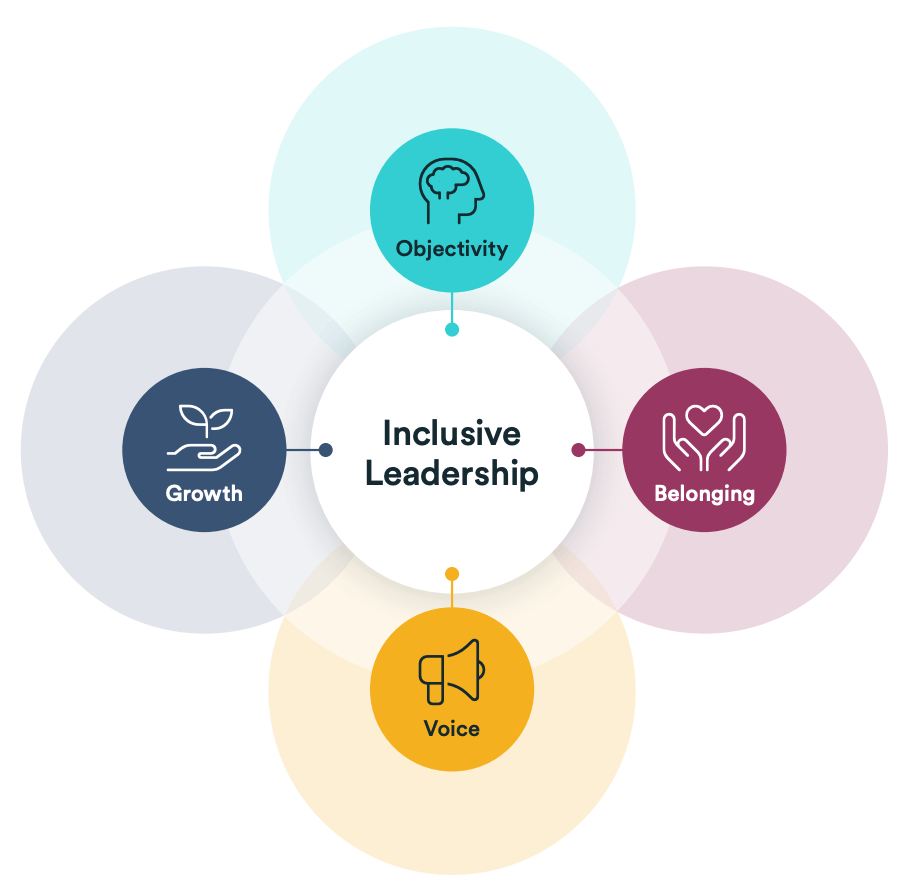
A truly effective leadership development program isn’t just about productivity or delegation. It teaches leaders principles, like Paradigm’s framework, to:
- Lead objectively by using clear, data-driven processes.
- Foster a sense of belonging so that employees feel safe, valued, and seen.
- Give voice by creating space for diverse perspectives.
- Promote growth by coaching for development and learning.
That’s why leading companies are rethinking leadership development from the ground up. They’re moving beyond static training programs and investing in inclusive leadership systems that drive measurable change. Paradigm’s approach is designed to do exactly that: equip leaders with the tools, coaching, and data they need to lead more inclusively, every day.
7 Best Practices for a Successful Leadership Development Program
An effective leadership development program combines measurable insights from data, inclusive training, and paths for ongoing learning. This builds confident, supportive, and growth-minded leaders. To build a strong program, follow these best practices.
Start With Foundational Mindsets
1. Ground Leadership in Inclusion
Inclusive leadership shouldn’t be an add-on to your workplace culture. It should be core to your management training programs if you want high performance and sustainable growth. Leadership teams need the training and resources to recognize biases, adopt inclusive behaviors, and leverage diversity from all backgrounds. Your training should also reveal individual strengths and gaps for your leaders.
This approach focuses on fairness, belonging, clear career paths, and employee nurturing. Practice the following:
- Train leaders to involve and provide opportunities for everyone on the team (and to spot leadership potential).
- Adopt platforms like Paradigm that help leaders manage biases and detect issues like underrepresentation of certain groups in hiring or advancement, then train leaders to pivot and adjust. Paradigm’s role is to go beyond training and help leaders understand the why, identify where they can grow, and give them the tools to make meaningful changes in how they lead.
- Help leaders understand how metrics related to inclusion, belonging, and engagement can help them spot team gaps and improve their ability to create meaningful career paths and high-performance teams.
2. Foster Innovation and Resilience Through Growth Mindsets
Leaders can foster a culture of growth by normalizing challenges, failures, and lessons learned. The impact of such initiatives goes beyond culture: 80% of executives believe a growth mindset directly impacts revenue growth.
Encourage growth mindsets within your senior leadership team. If leaders see setbacks, whether their own or their team’s, as opportunities to improve, they can take increased ownership of their growth and development and better support their teams during challenging times.
Establish and Practice Behavioral Skills
3. Blend Data and Development for Personalized Learning
Everyone has room to improve and build new skills—even your best leaders. Accurate data helps highlight areas for growth.
Incorporate a self-assessment to benchmark current leadership skills. Paradigm’s leadership self-assessment provides personalized analyses, ratings, and actionable steps for leaders to improve their approach to healthy, high-performing workplaces.
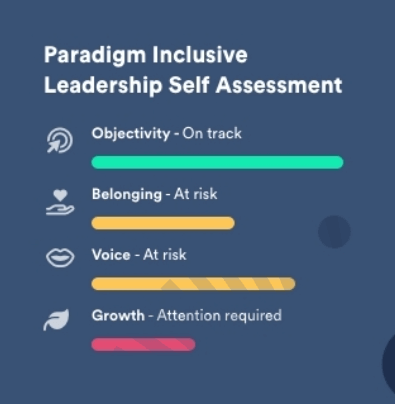
Along with self-awareness exercises, use a workplace culture platform that leverages AI-powered insights to find gaps. Since metrics can also be biased, the platform you choose matters. Find one like Paradigm that uses expert-driven solutions and research-backed assessments to evaluate leadership behaviors and provide workplace data that is both accurate and actionable.
4. Make Learning Ongoing and Role-Relevant
Values only drive change when they’re embedded in everyday leadership behaviors.
Embed inclusive leadership development into consistent tasks like:
- Hiring: Empower your leaders to hire efficiently by spotting critical skills, using structured rubrics to evaluate candidates’ consistency, and leveraging data to measure and improve hiring outcomes.
- Performance feedback: Incorporate processes that don’t hinge on just one annual review. Train leaders to provide ongoing feedback loops and transparency, such as one-on-one meetings, SMART goals, encouragement opportunities, and safe spaces where employees can express ideas and concerns.
- Executive coaching, mentoring, and ongoing training resources: Use resources like Paradigm’s expert-led workshops to equip your leaders with new skills for making fair decisions and becoming more effective leaders. Coaching is a powerful tool, especially for senior leaders, because it helps surface their unique areas for improvement and translate insights into action.
These practices produce real results. Guild, a company that provides education and skilling pathways, partnered with Paradigm to build an inclusive culture and incorporated Reach online training, open discussions, and continuous learning. After their initial training, its executives leveraged their learnings across the organization, resulting in 3,900 hours of education and a 33% improvement in understanding how to implement inclusion.
5. Train Leaders To Amplify and Support Employee Voices
Diverse and unique perspectives bring immense value to your company. But you can only benefit from diverse ideas and innovation when employees feel safe sharing them.
Leaders must be trained to foster employee voices, listen actively, and create room for feedback without fear of retribution. These strengthen belonging and psychological safety—two attributes that also predict team performance.
Equip your leaders with skills like:
- Active listening
- Acknowledging and acting on feedback
- Creating space for dissent and dialogue
Remember: these leadership abilities, like fostering belonging, aren’t add-ons. They’re core leadership competencies that drive team performance and should be a core part of every manager’s toolkit.
Use Data to Power Accountability
6. Prioritize Objective Decision-Making
Train your leaders to base decisions on employee performance and provide specific resources, like mentorship, feedback, or skill-building opportunities, so every team member has a fair path to growth.
Paradigm’s workshops, for example, offer the inclusivity and objectivity training your leaders need to build diverse teams that feel they belong.
In our Paradigm group leadership sessions, we walk through each pillar—objectivity, belonging, voice, and growth—and review strategies leaders can use to build those conditions on their teams. After those sessions, leaders commit to a next step, like building more objective decision-making into their day-to-day or setting team norms to increase belonging at work across their teams, thus enabling higher performance.
7. Set Accountability-Focused Metrics
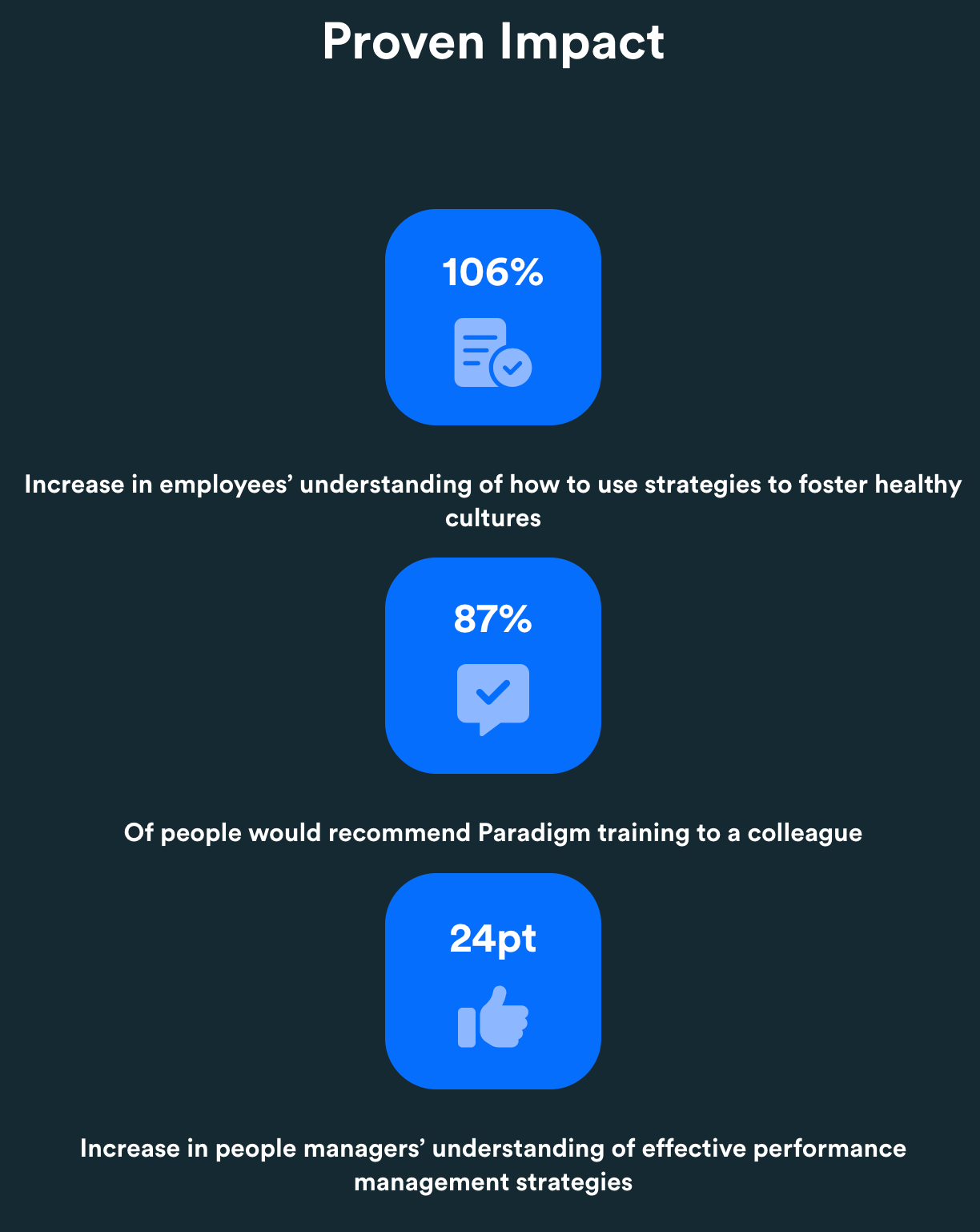
Measurement is what turns learning into outcomes. Use inclusion-aligned metrics, like belonging, psychological safety, and engagement data, alongside traditional KPIs to track how leadership behaviors translate to real results.
Prioritizing these metrics alongside traditional ones (like productivity) helps leaders stay focused on creating an inclusive workplace culture.
With accountability in place, they’re more likely to drive positive outcomes for the organization. If leaders fall behind, you won’t have to start the conversation out of the blue. These are documented, measurable objectives you can discuss with supervisors.
How To Measure What Matters for Inclusive Leadership Development
Checking a box on five hours of leadership training isn’t enough. You need to measure whether the training drives meaningful impact that’s tied directly to your business goals. When accurate and unbiased, key performance indicators (KPIs) provide a useful benchmark for leadership effectiveness. Consider analyzing these metrics:
- Leadership self-assessment scores: Track how your leaders rate themselves before and after development training.
- Workplace maturity scores: Confirm whether or not scores improve as your leaders adopt the right behaviors and align with your maturity goals.
- Fairness perception changes: Monitor employee feedback regarding perceived fairness in promotions and opportunities, like upskilling or working on new projects.
- Voice and belonging indicators: Measure employee satisfaction and perceptions of belonging, psychological safety, and inclusion.
- Employee engagement and retention rates: Track how your leadership skill development efforts influence engagement and retention.
It’s important to measure impact at multiple levels, based on individual, team, and organizational growth. Paradigm’s Culture for Everyone platform and framework provide the benchmarking tools to capture and interpret these metrics and turn them into actionable steps, aligning your leadership competency goals with business outcomes and stakeholder expectations.
Inclusion: The Missing Piece in Most Leadership Programs
Inclusive leadership isn’t just a nice-to-have initiative. It’s a proven driver of performance. That’s why, in Paradigm’s 2025 Benchmarking study, 84% of organizations reported investing in inclusion training and 91% reported prioritizing recruiting diverse talent.
These efforts to find and support employees of all backgrounds aren’t just about representation. The same Paradigm study showed that teams that feel a sense of belonging and fairness see an average 56% increase in job performance. Inclusivity is a must, and effective leaders are essential to improving workplace diversity and belonging.
Ignoring inclusivity means you risk missing out on enhanced performance (and the profitability that comes with it), innovative ideas, and a healthy culture built on fairness and transparency. By cultivating an inclusive management team, you can increase employee engagement, reduce turnover, and boost productivity.
Paradigm’s blended approach to leadership development combines data and training to align your goals with measurable business results. With AI-driven insights and expert guidance from Paradigm Blueprint, you can empower your leaders to build an inclusive culture that drives growth and success.
If your leadership training isn’t building inclusion and driving results, it’s time to raise the bar. Paradigm can help you equip leaders with the data, tools, and coaching to lead for today’s workforce.