Our website uses cookies to distinguish you from other users of our website. This helps us to provide you with a good experience when you browse our website and also allows us to
improve our site. By continuing to browse our website, you’re agreeing to our use of cookies. For more information, please read our
Our website uses cookies to distinguish you from other users of our website. This helps us to provide you with a good experience when you browse our website and also allows us to
improve our site. By continuing to browse our website, you’re agreeing to our use of cookies. For more information, please read our


Paradigm
Paradigm’s Culture for Everyone Platform seamlessly integrates AI-enabled software with a team of experts to help companies build high-performance cultures where everyone can do their best work.
When employees feel they belong at work, performance increases by 56% and turnover risk drops by 50%. These aren’t just impressive numbers—they’re proof that belonging drives business outcomes.
Most organizations collect company culture data through employee engagement surveys and satisfaction surveys, but struggle to turn those valuable insights into action. The result? Surveys become another checkbox exercise rather than a strategic tool for building a high-performance culture.
Here’s what many miss: whether you call it “employee satisfaction” or “employee engagement,” they’re two sides of the same coin. Both measure employee sentiment—the emotional pulse of your workplace culture—and reveal whether people feel they belong, are valued, and can thrive.
Think of surveys as the visible tip of a culture iceberg. What employees tell you on the surface matters. But when analyzed through a more robust culture lens, those responses uncover deeper drivers: benefits, training, and internal processes. These are the hidden factors that impact engagement, not to mention performance and retention.
Key Takeaways
- Employee satisfaction levels predict turnover risk. When belonging scores drop, turnover increases—making satisfaction data an early-warning system for cultural erosion.
- Most surveys miss what matters most. Surface-level questions like “I like my job” fail to probe belonging, fairness, psychological safety, and voice—factors that drive retention.
- Surveys without follow-through destroy trust. When team members share feedback but see no action, engagement drops and skepticism grows.
- Inclusive survey design reveals gaps. Analyzing results by demographic, tenure, and team uncovers for whom culture isn’t working, enabling targeted interventions.
Why Employee Sentiment is a Retention Strategy
Recent employee retention data shows that 52% of respondents say they’re currently looking for a different job, while only 26% would recommend their organization as a great place to work. These numbers represent more than employee happiness—they signal retention risk.
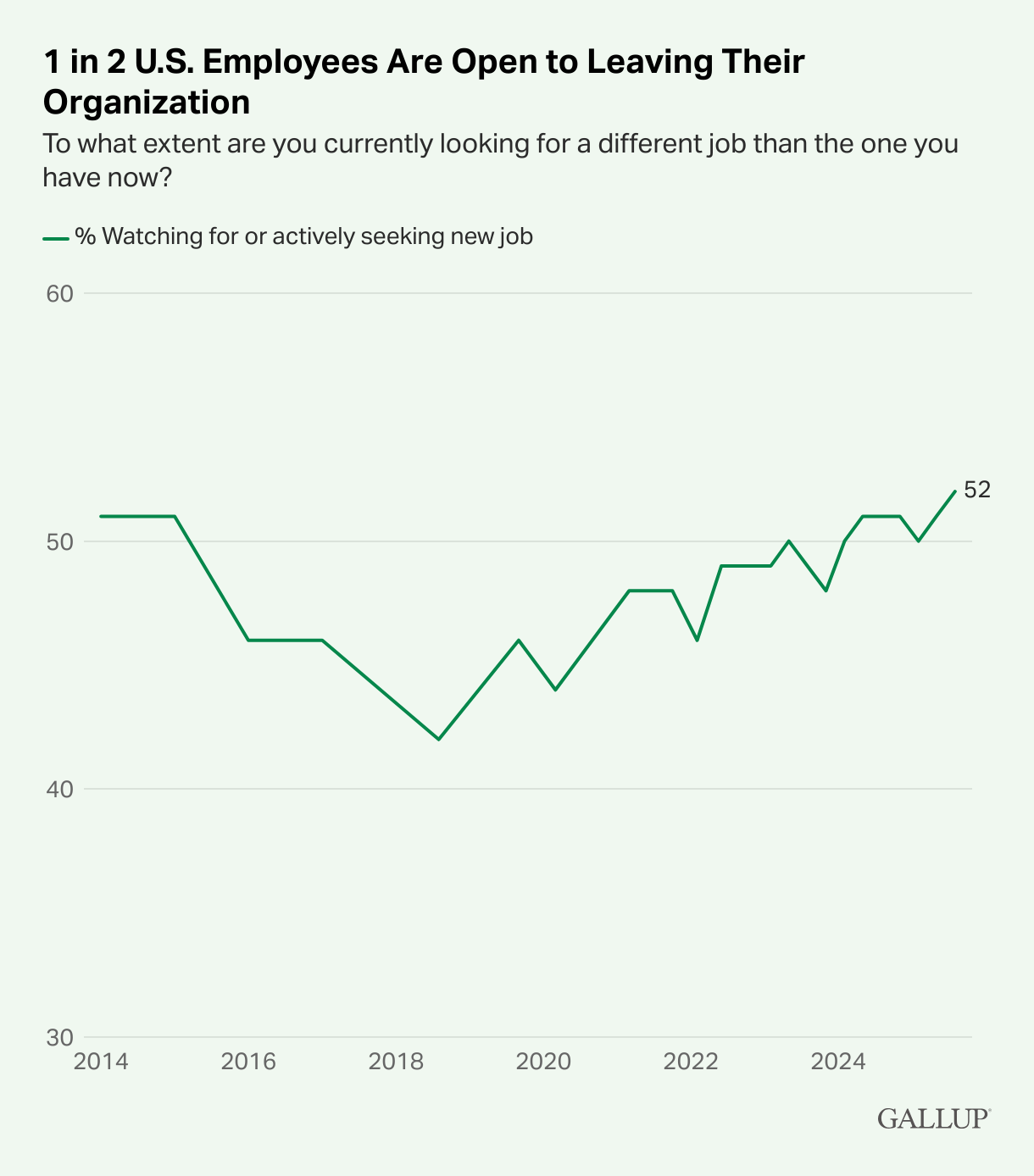
Culture is one of the most powerful levers of performance and retention. When you connect the dots between employee satisfaction surveys and workplace culture policies, processes, and metrics, these surveys serve as early-warning systems for business risk. They help leaders identify where engagement, belonging, or fairness are eroding before problems become crises.
Belonging can function as a leading indicator of engagement and retention. When scores drop, the risk of high turnover increases. Beyond tracking how people feel about work or how motivated they are to contribute, organizations that track why people feel the way they do about work gain a more complete picture of employee morale.
Belonging: The Other Half of the Satisfaction Equation
Asking “How satisfied are you with your role?” and “How engaged are you at work?” helps you understand the emotional and motivational pulse of your organization’s culture.
Belonging is the other piece of the employee satisfaction puzzle. When employees feel they belong, they’re more likely to be both satisfied and engaged. This connection drives higher performance and retention. Research from BCG shows that psychological safety—a key component of belonging—effectively functions as an equalizer, enabling diverse employee groups to achieve the same workplace satisfaction as their more advantaged colleagues.
Consider this reality: satisfaction without belonging is superficial. An employee might say they’re satisfied with their benefits or workspace, but if they don’t feel included in decision-making or valued by their team, they’ll still leave.
Similarly, engagement without inclusion is unsustainable. You can’t expect engaged employees to bring their full energy and ideas if they don’t feel psychologically safe or believe their contributions matter.
Early Warning Signals in Survey Data
Surface-level data, like turnover rates, review scores, and overall satisfaction scores, is visible. But belonging, fairness, and psychological safety live beneath the surface along with benefits and compensation, workflow designs, and company values. Combining above-the-surface data with insights from below the surface gives companies a clearer picture of overall workplace culture and employee satisfaction.
The American Psychological Association’s (APA) 2024 Work in America Survey shows how outcomes above the surface and drivers hidden below the surface can connect. It found that workers who experience psychological safety report higher job satisfaction, better relationships with colleagues, and fewer negative outcomes like emotional exhaustion and burnout.
Here’s what early warning signals look like in practice:
- Declining satisfaction scores among mid-tenure employees: Your overall satisfaction score looks healthy at 72%. But when you segment by tenure, employees with 2-4 years of experience score 58%—14 points below average. This gap signals a retention crisis: your organization attracts talent but fails to develop or include them once they’re established.
- Department-level belonging gaps: Your engineering team reports 85% satisfaction, but only 62% belonging. This disconnect suggests people like the work but don’t feel psychologically safe or valued. Without intervention, your top performers will leave for a work environment where they can thrive, not just survive.
- Demographic disparities in fairness perceptions: When women and people of color rate fairness 20 points lower than white men, you have a systemic issue. These gaps predict turnover and signal that policies, practices, or leadership behaviors are creating inequitable experiences.
What’s Missing from Most Satisfaction Surveys
Pew Research Center’s 2024 job satisfaction survey found that on seven of nine items measured, the shares of workers expressing high satisfaction dropped by three to seven percentage points from the previous year. This declining trend suggests something deeper is happening.
Most employee satisfaction survey questions measure surface-level sentiment—for example: “I would recommend this company to a friend,” “I am satisfied with my job overall,” or “I feel valued by my manager.” These questions aren’t wrong, but they fail to probe what truly drives belonging, fairness, and retention.
Here’s what’s often missing from surveys that try to measure belonging, fairness, psychological safety, and voice:
Measuring Belonging
Ask: Do people feel valued and included across teams?
Employees who feel a sense of belonging at work might respond with:
- “People from all backgrounds have equal opportunities here.”
- “I can be authentic at work without fear of judgment.”
- “My unique perspective is valued by leadership.”
Measuring Fairness
Ask: Are decisions and opportunities consistent and transparent?
If employees believe your organization is fair, they might respond with:
- “Performance evaluations and career growth opportunities are based on clear, objective criteria.”
- “Compensation decisions are explained clearly.”
- “When conflicts arise, they’re resolved fairly.”
Measuring Psychological Safety
Ask: Can employees speak up without risk?
Responses like these usually indicate you’re on the right path:
- “I feel comfortable challenging ideas in meetings.”
- “Mistakes are treated as professional development opportunities, not failures.”
- “I can report problems without fear of retaliation.”
Measuring Voice
Ask: Are initiatives from all levels considered and acted upon?
Ideally, you’ll hear employees say:
- “Leadership regularly asks for employee input.”
- “My suggestions have led to meaningful changes.”
- “I believe employee feedback influences decisions.”
These “below-the-surface” measures reveal what engagement scores alone can’t. They’re the difference between understanding that employees are unhappy and understanding why—and what to do about it.
From Insight to Action: Turning Sentiment into Strategy
Survey fatigue drastically reduces response rates, distorting specifics and misrepresenting employee experience and sentiment. When employees see no action after sharing honest feedback, they stop participating. Over time, this erodes trust in both the survey process and leadership’s commitment to improvement.
At Paradigm, our approach follows a clear model: Get insight, take action, enable people.
Questionnaires generate insights. But insights without follow-through are worse than no survey at all—they signal to employees that their voices don’t matter.
Diagnose Systemic vs. Fixable Issues
Not all survey findings require the same response. Some reveal systemic problems—policies, inequities, or cultural patterns that block belonging. Others point to fixable issues, such as communication gaps or localized team challenges.
Systemic issues require structural change:
- Promotion rates differ significantly by gender or race: Review promotion criteria and decision-making processes.
- Employees report inconsistent performance feedback: Implement standardized high-performance management practices.
- Belonging scores are low across multiple departments: Launch workplace culture training and revise hiring practices.
Fixable issues need targeted interventions:
- One team reports poor manager communication: Provide workshops and training on feedback skills for that manager.
- Remote workers feel disconnected: Create virtual team-building opportunities.
- New hires struggle with onboarding: Revise the first-90-days experience.
Paradigm’s AI tools and strategy consulting help leaders distinguish which issues require organizational transformation and which require team-level action. This precision prevents wasted resources and accelerates progress.
Communicate, Act, and Reassess
To make the most of your survey results, they need to be clearly communicated to employees and acted upon strategically. Let your teams see how their feedback translates into measurable changes.
Effective survey follow-through includes five critical steps:
- Share results transparently in a timely manner
- Link insights to clear next steps with specific owners and timelines
- Show progress regularly through quarterly updates
- Make changes visible so employees see that their feedback matters
- Reassess through follow-up surveys to measure improvement
This accountability-driven communication builds trust and encourages participation in future surveys. Consider how Culture for Everyone research demonstrates the business case for this work. When organizations take action on survey insights, they see measurable improvements in performance, retention, and inclusive culture.
Common Challenges with Employee Satisfaction Surveys
Even well-designed surveys face predictable obstacles. Recognizing these challenges helps you design around them:
- Survey fatigue: Research shows that longer surveys may increase survey abandonment rate by around 50%, and increasing the length from three to four questions can drop completion rates by 18%. Keep surveys focused and limit frequency to quarterly or twice per year.
- Leadership inaction: When survey results gather dust, employees stop participating. Combat this by committing to action before launching the survey and communicating progress regularly.
- Biased or incomplete data: If only satisfied employees respond, results won’t reflect reality. Increase participation through anonymous surveys, leadership endorsement, and clear communication about the survey’s purpose.
- Over-focusing on happy employees: High satisfaction scores can mask underlying problems. Always analyze by demographic segments to identify who’s thriving and who’s struggling.
- Treating symptoms instead of root causes: Employees report low satisfaction with work-life balance. Rather than adding a wellness perk, examine workload distribution, meeting culture, and expectations around after-hours communication.
- Not asking the right questions: Generic satisfaction questions produce generic insights. Incorporate survey questions about belonging, fairness, psychological safety, and voice to understand deeper cultural dynamics.
Each challenge has solutions—the key is acknowledging that effective employee satisfaction surveys require ongoing refinement based on what you learn from them.
Transform Surface-Level Data into Strategic Action
What separates organizations that successfully use employee satisfaction surveys from those that don’t? It’s not the survey itself. It’s what happens next.
Paradigm doesn’t just measure satisfaction. We translate sentiment into sustained, high-performance culture change through a unique combination of AI and human expertise.
Our platform connects:
- Survey data from satisfaction and engagement measures
- Focus group insights that add qualitative depth
- HRIS data revealing retention patterns and promotion rates
- Employee social media posts and media coverage about workplace culture
- Company reviews from online review sites like Glassdoor and Indeed
- Staff benefits, compensation, and organizational structure data
- Cultural artifacts such as company rituals, traditions, and unwritten rules
This integrated approach uncovers patterns invisible in survey data alone.
For example, you might see that mid-career women report lower satisfaction. But when you layer in HRIS data, you discover they’re also promoted at half the rate of peers and leave within 18 months of being passed over. That’s not just a satisfaction problem—it’s a fairness and advancement problem requiring systemic change.
Paradigm’s AI-powered insights help you:
- Identify which cultural drivers have the greatest impact on retention
- Prioritize interventions based on potential ROI
- Track progress through organizational maturity benchmarks
- Scale personalized action plans across departments
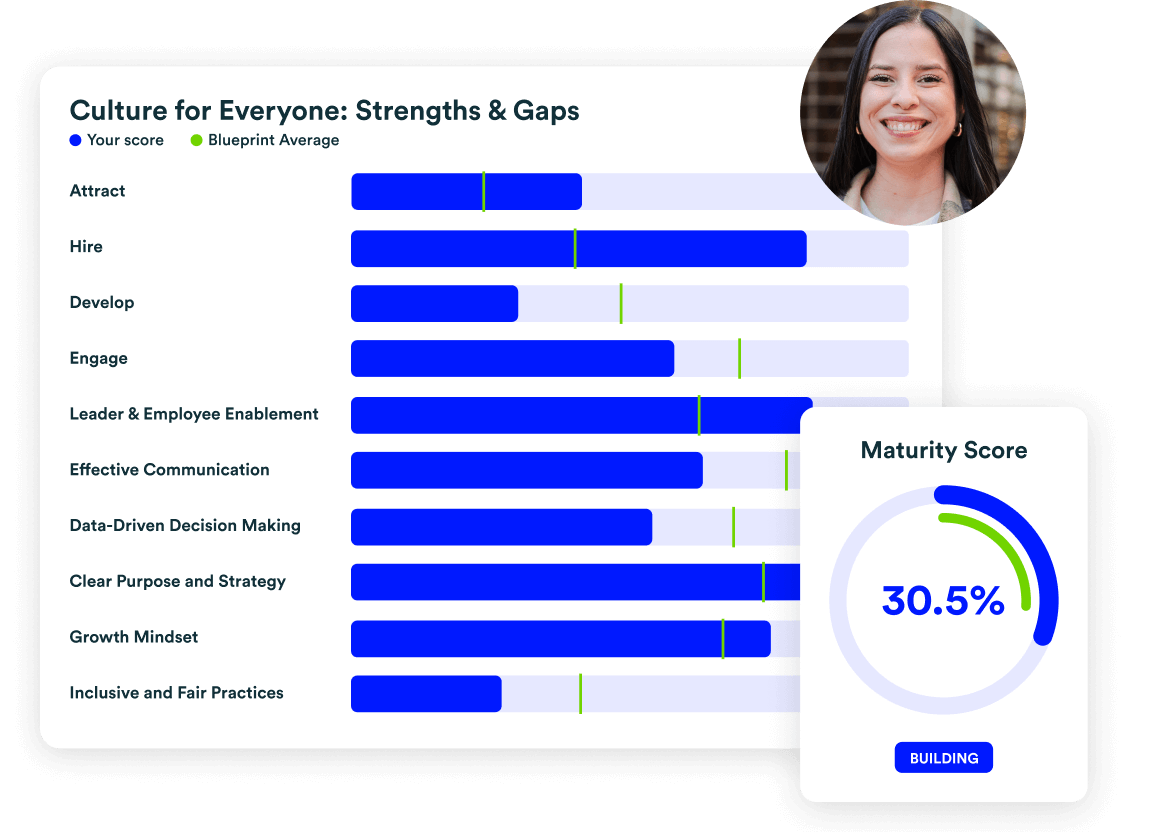
This isn’t theory. Organizations using Paradigm’s approach see measurable retention improvements, stronger inclusive leadership capabilities, and a stronger workplace culture.
Ready to transform your employee satisfaction surveys into a retention strategy? Speak with Paradigm’s experts about how our platform turns data into action.
FAQs About Employee Satisfaction Surveys
How often should organizations run satisfaction surveys?
Most organizations should conduct comprehensive satisfaction surveys annually, with shorter pulse surveys quarterly. Research shows that 77% of employees want to provide feedback more than once per year, with the majority preferring four times annually. The key is balancing frequency with action—only survey when you’re prepared to act on results and communicate progress.
How do you turn survey results into action?
To turn survey results into action, start by analyzing data beyond averages to identify gaps by demographic, tenure, and team. Categorize findings as systemic (requiring organizational change) or fixable (needing team-level intervention). Share results transparently in a timely manner, link insights to clear action plans with owners and timelines, and provide quarterly progress updates. Most importantly, make changes visible so employees see that their feedback has created a meaningful impact.