
Employee Listening & Culture Data
4 Types of HR Analytics Tools: A 2026 Guide for HR Leaders
Paradigm
·

Tracking workforce data is just the start. The most competitive HR teams use analytics to transform culture and performance. Unifying people data with actionable insights and behavior changes can move HR teams beyond monitoring dashboards to reveal the path to creating a culture for everyone.
Understanding HR analytics is about more than tools—it’s about making your data work for you to build resilient, performance-driven workplace cultures. Analytics don’t just measure outcomes. They have a noticeable impact on culture, productivity, and progress.
Still, many organizations struggle to fully harness these insights. Data siloes, unclear priorities, and resistance to change often stand in the way of scaling an inclusive workplace culture. To overcome these challenges, it’s critical to understand the types of HR analytics tools available, the key features to look for, and how to evaluate your options.
What Are HR Analytics Tools?
HR analytics tools are software platforms that collect and analyze HR data to help organizations optimize how people work, stay, and grow. They go beyond basic reporting to help HR leaders understand why certain trends are happening within their workforce. They also provide valuable insights into how they can better optimize HR strategies.
According to research by McKinsey & Company, organizations with highly effective talent management are significantly more likely to outperform their peers. Public companies with strong people and analytics strategies are up to six times more likely to report higher total returns to shareholders than those with ineffective systems.
HR analytics software tracks key metrics like:
Attrition
Hiring funnel performance
Manager effectiveness
Pay equity
Retention
These HR metrics can help you diagnose past business trends, forecast future outcomes, and make data-driven decisions on how to move forward to reach desired results.
But access to these data sets alone isn’t enough to realize these benefits. To drive real change, reveal friction points, and support measurable progress, HR professionals need tools that combine measurement with strategy.
4 Types of HR Analytics Tools
There are multiple types of HR analytics tools, each focusing on different HR functions. Finding the best-fit solution for your organization starts with nailing down which type of system matches your needs.
Here are four common types of cloud-based HR systems and a few leading products from each category.
People analytics platforms
Core HR systems (HRIS)
Employee feedback and experience tools
Business intelligence and visualization tools
1. People Analytics Platforms
People analytics platforms collect, analyze, and evaluate employee data to help you make better decisions about the people-oriented aspects of HR. This includes:
Employee performance management
Workforce planning
Talent management
Employee turnover rates
Skill gaps
Employee satisfaction
The following people analytics platforms can transform how you manage your workforce.
Surface by Paradigm
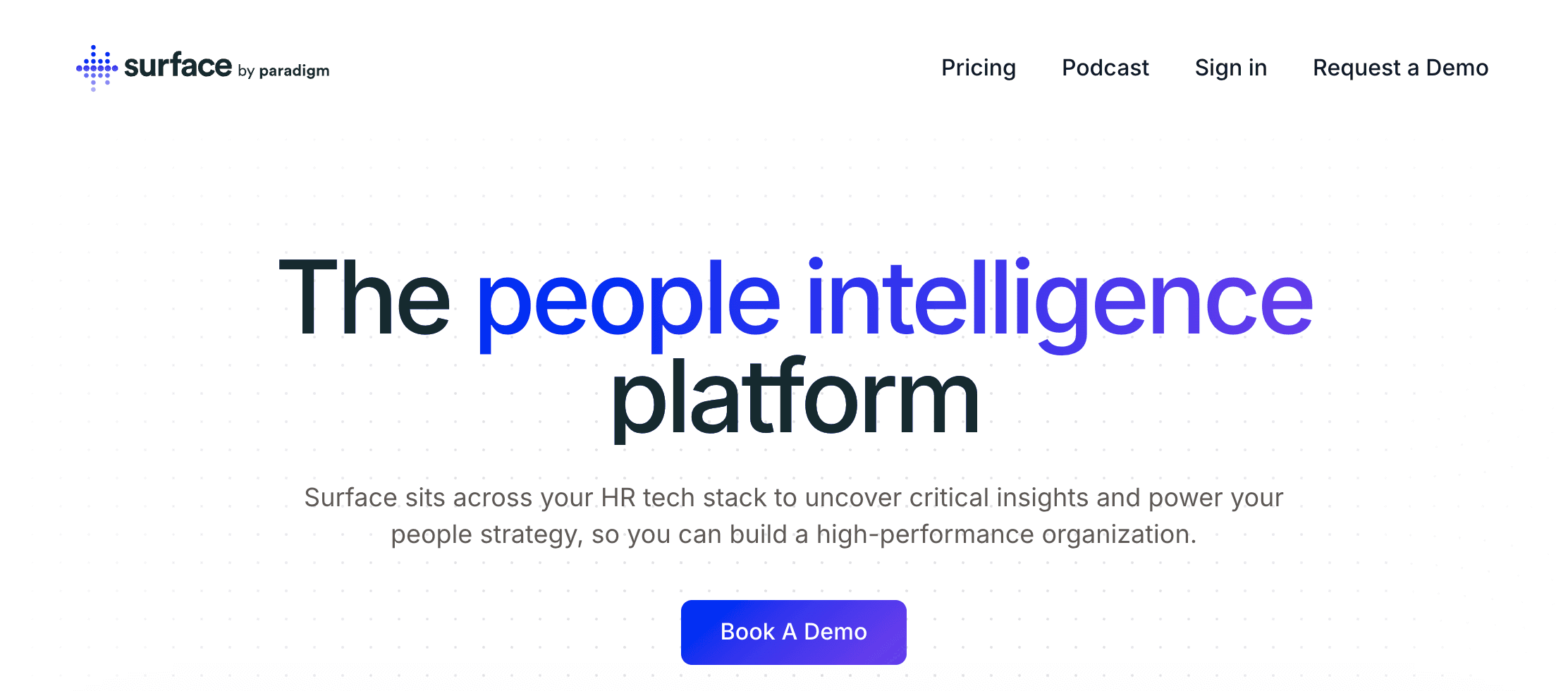
Surface is Paradigm’s AI-native people analytics platform, and it works a bit differently from most tools in the category. Instead of giving HR leaders another dashboard to interpret on their own, it pulls together the data that’s usually scattered across HRIS, performance, survey, and policy systems, benchmarks it against peers, and turns that into drafted policies, playbooks, and strategies for building a culture of belonging that are ready to use.
It’s built on Paradigm’s 12 years advising more than 2,000 companies, so the recommendations come with real peer context attached, which is exactly what’s missing from most tools in this space since they’re good at measuring things but leave the “now what do we do” part up to you.
Visier
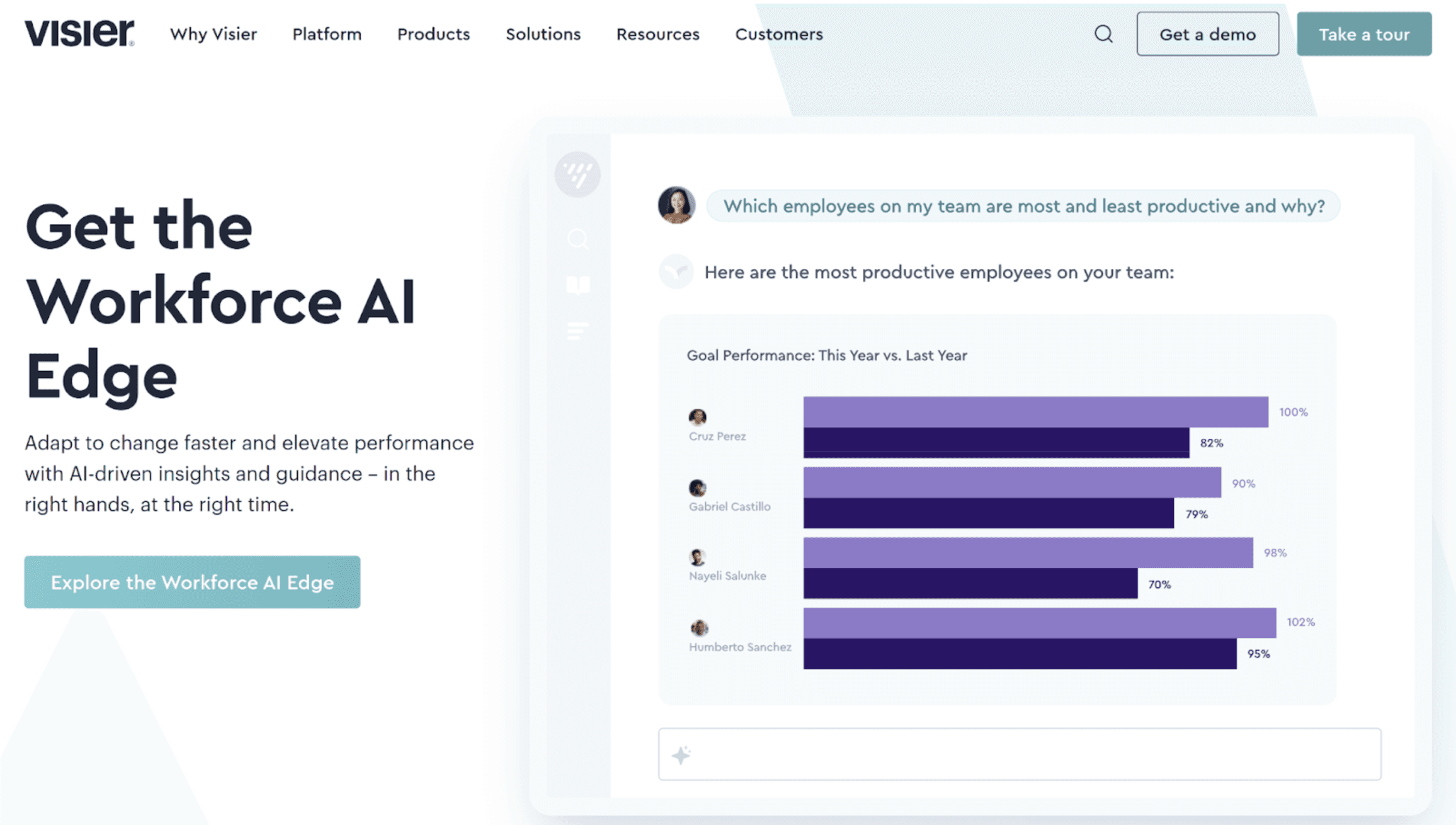
Visier is people analytics and workforce planning software that uses data analysis to empower more informed decision-making. It excels at consolidating data from multiple HR systems into a single source, making it easier to solve people-related challenges.
Visier can unify data from HR systems like:
Human capital management systems (HCMS)
Employee engagement systems
Talent acquisition systems
Business management systems
Cloud storage systems
Features:
Real-time insights: Make confident, informed decisions knowing you’re looking at the most up-to-date data.
Automation: Automate routine reporting and analytics using AI-powered tools.
Data security: Use role-based access control to ensure employees can only view the information they need.
2. Core HR Systems (HRIS)
Human resources information systems serve as centralized databases for HR information, including employee data like pay rates and benefits. These platforms manage many day-to-day HR processes, such as:
Recruiting top talent
Onboarding and offboarding
Running payroll
Tracking time
Monitoring performance metrics
Managing the employee database
Rippling
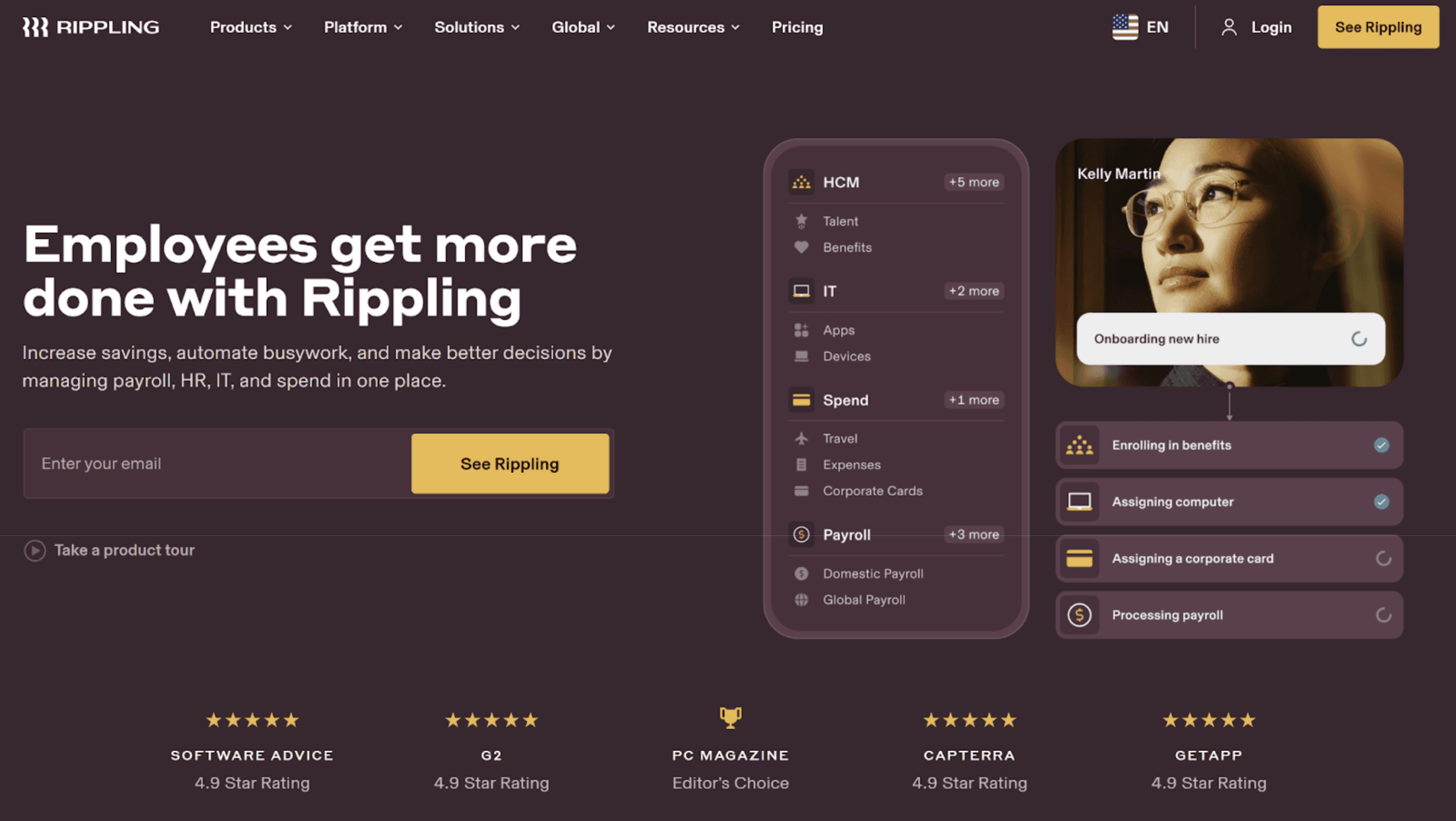
Rippling is a workforce analytics and management program that integrates HR, IT, and finance solutions into a single platform. It can help you handle everything from corporate cards and expense management to device inventory and benefits administration.
Features:
Workflow Studio: Automate advanced workflows with custom triggers that lead to predetermined actions.
Reporting visuals: Streamline report creation with pivot tables, line graphs, scatter plots, and more.
Supergroups: Enforce company policies using custom membership lists based on role and/or location.
Workday
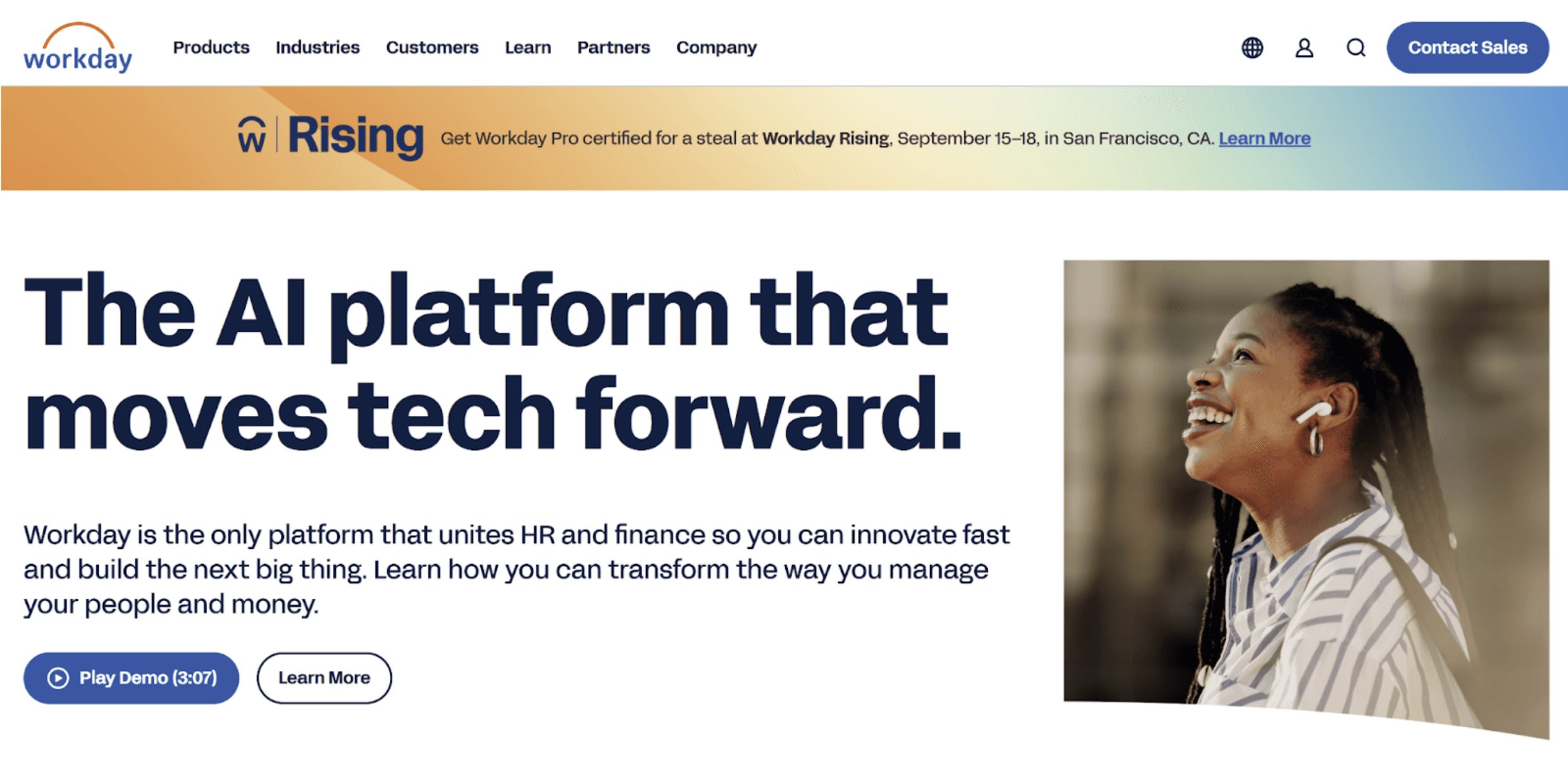
Workday offers a comprehensive view of an organization’s workforce and financial data through a cloud-based software platform. It offers solutions for human capital management, HR analytics, financial management, operational planning, and beyond.
Features:
Predictive analytics and forecasting: Model complex scenarios to understand their impacts and plan accordingly.
Drag-and-drop report builder: Create sophisticated reports with a user-friendly interface.
Close and consolidation: Accelerate critical close and consolidation tasks by automating them in compliance with international accounting standards.
3. Employee Feedback and Experience Tools
Employee experience and feedback tools help employees feel more connected and purposeful within their organization. These platforms focus on providing ways for team members to grow personally and professionally while making it easier to feel they have a voice within the company.
Culture Amp
Culture Amp is an employee experience platform designed to improve employee engagement, performance, and development. It combines data science and organizational psychology to help organizations build better cultures.
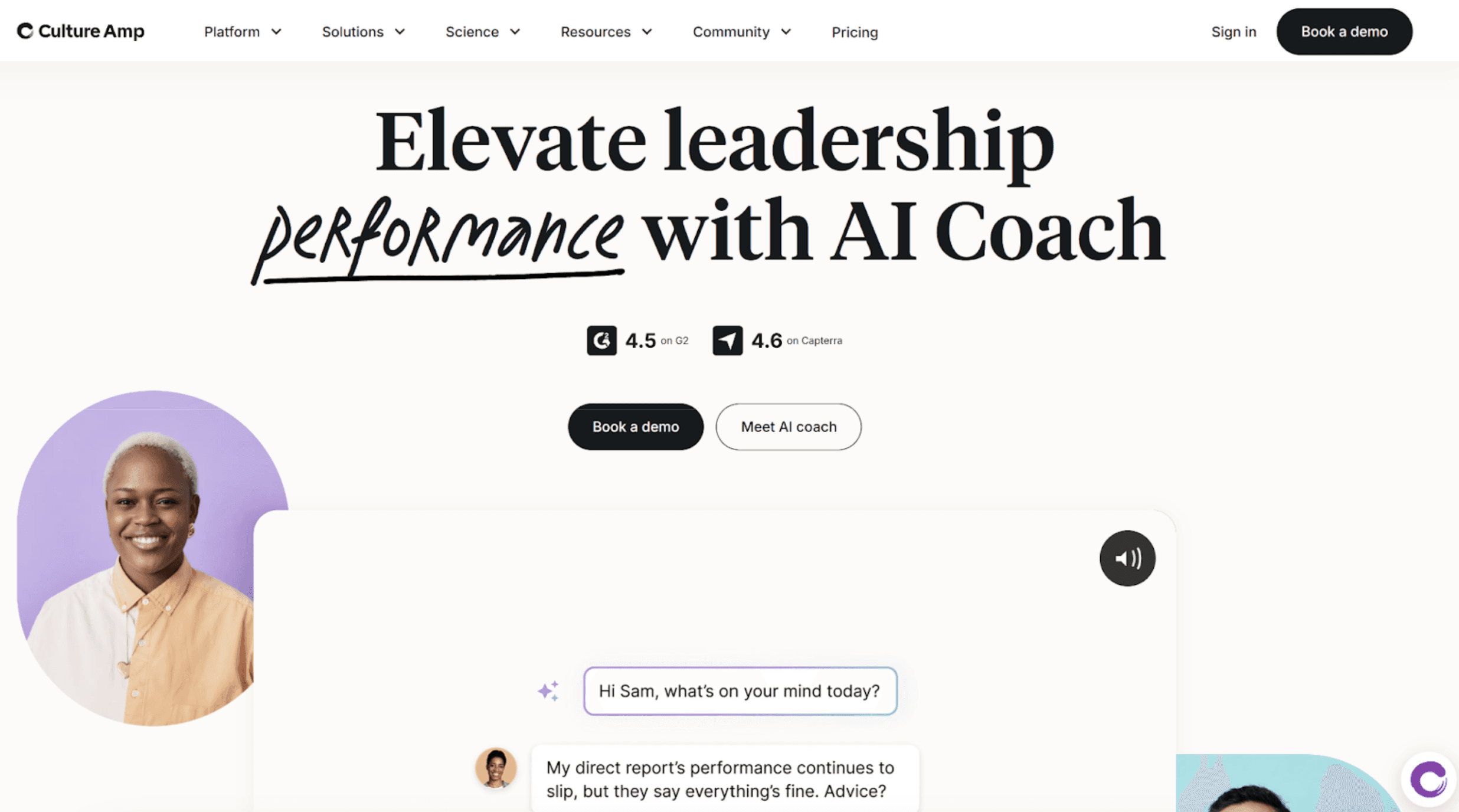
Features:
Ready-to-use templates: Start collecting data immediately with existing survey templates.
AI content summaries: Get unbiased summaries of all survey comments to understand better and act faster.
Personalized growth plans: Create custom employee development plans to motivate and engage employees.
Qualtrics
Qualtrics is an experience management platform that uses specialized AI to optimize experiences for both employees and customers. Its employee experience product was created to improve manager effectiveness and engage teams while helping organizations make informed decisions.
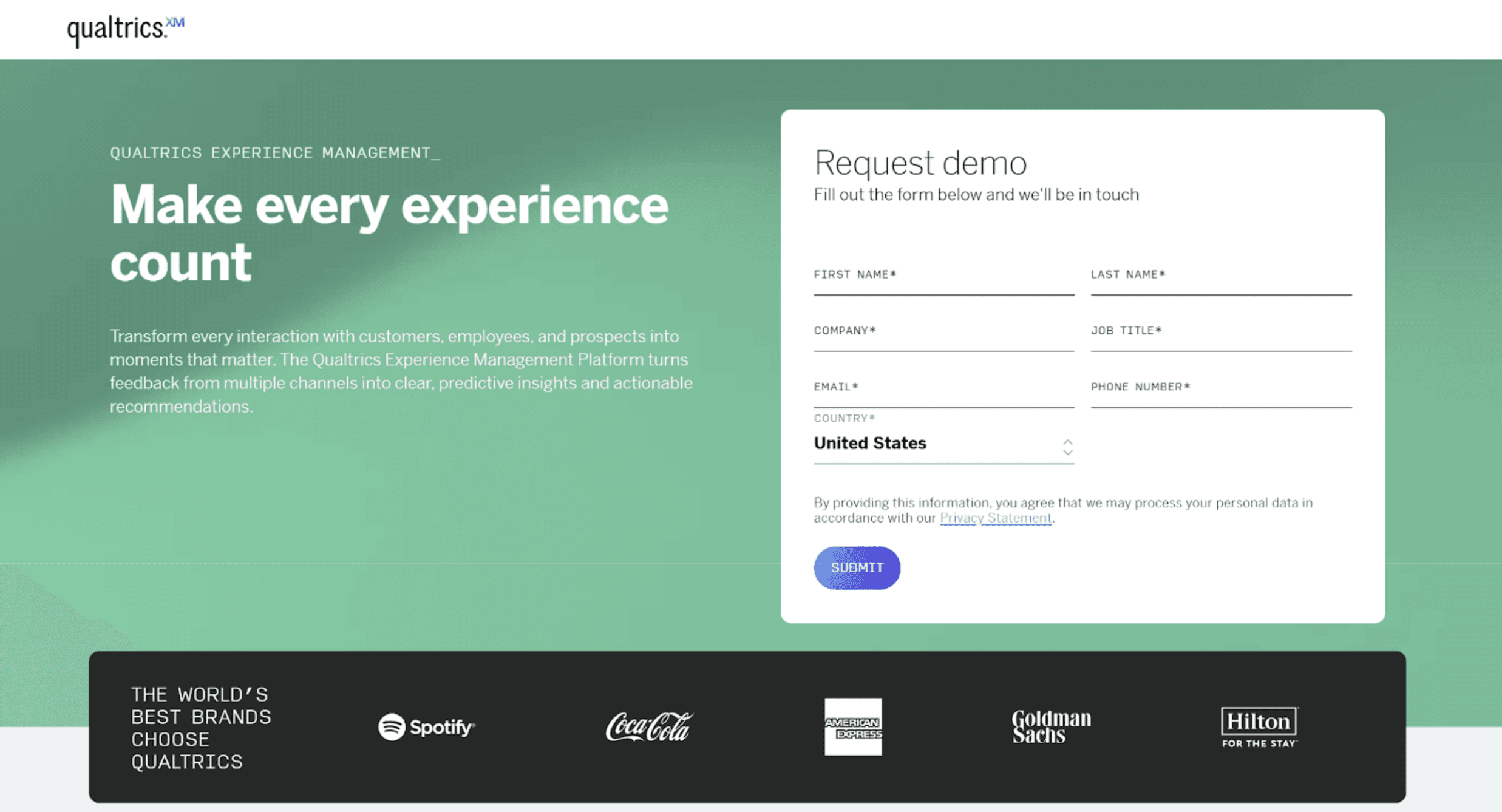
Features:
Real-time pulse surveys: Capture employee feedback continuously so you can respond quickly to concerns.
Advanced survey tools: Enhance employee privacy with anonymous link distribution and built-in enterprise security.
Candidate conversion tracking: Track your hiring process in real time to see where top candidates are dropping off.
4. Business Intelligence and Data Visualization Tools
Business intelligence tools collect data and help you make sense of it faster through data visualizations like charts and dashboards. These tools are helpful for identifying patterns and tracking trends in data over time.
Tableau
Tableau is a visual end-to-end analytics platform that helps you connect to, visualize, and analyze data so you can make research-backed decisions. It’s known for its ease of use, making it simpler to explore and manage business data.
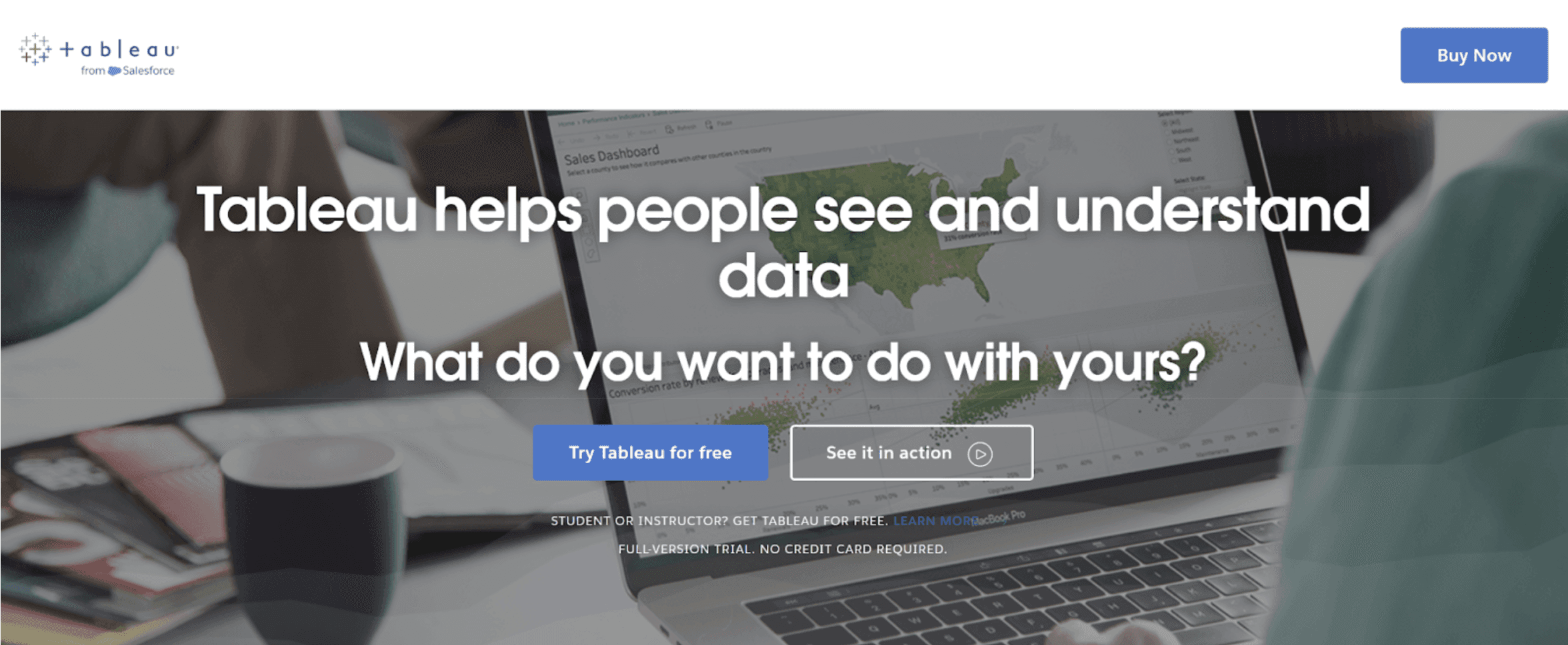
Features:
Data enrichment tools: Receive business context and meaning automatically with analytics data to quickly understand its relevance.
Compliance-first: Get built-in data governance, security, and compliance with the option to integrate with your single sign-on (SSO).
Tableau Prep: Combine and clean data for analysis in a few clicks with self-service data preparation.
Power BI
Power BI is a scalable data visualization platform that lets you integrate visuals into other Microsoft apps, such as Microsoft 365 and Microsoft Teams. It helps you create a governed source of truth to organize your data and control access.
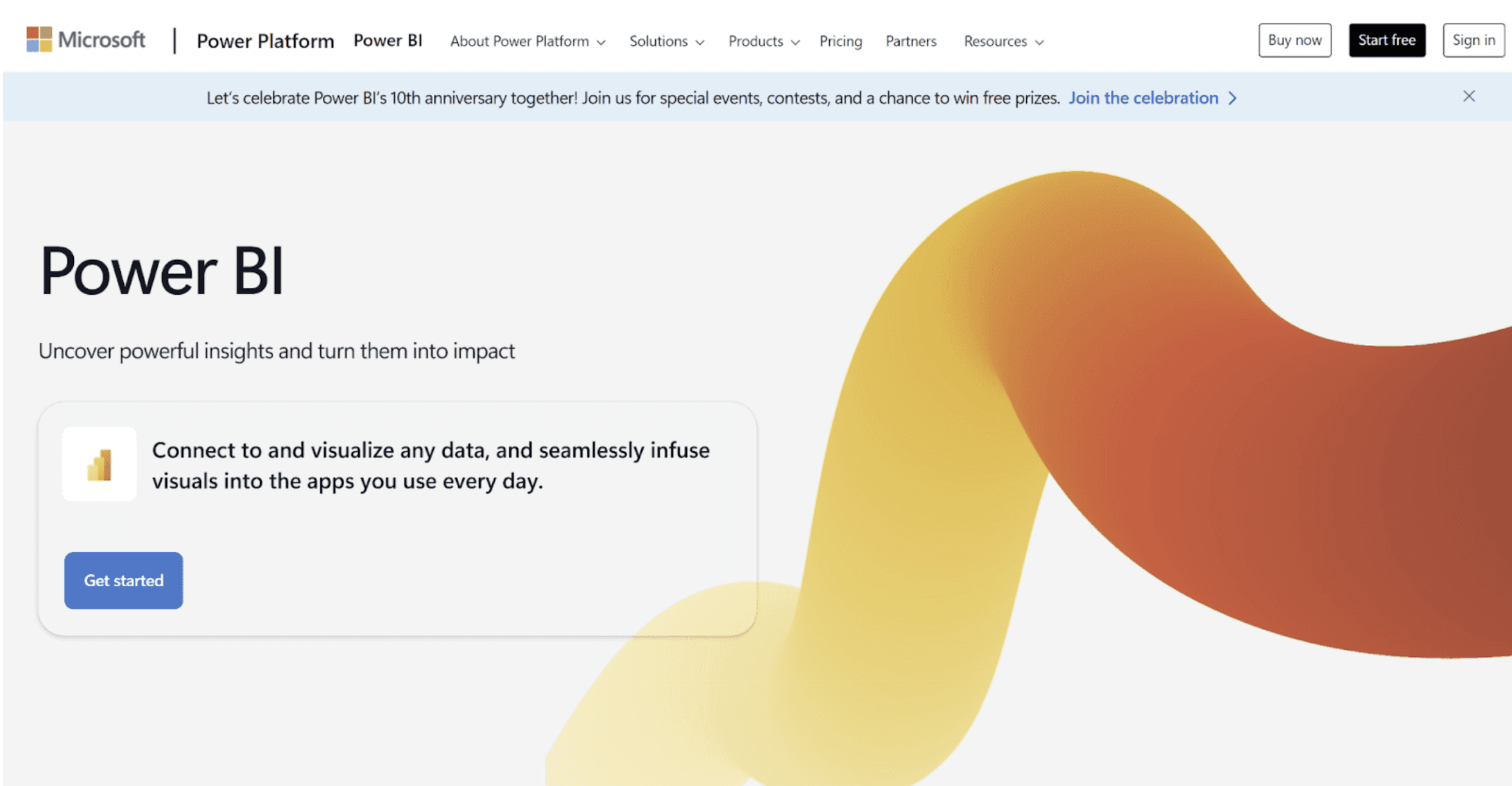
Features:
Simple learning curve: Create visuals easily, even if you’re a nontechnical business user with zero programming experience.
Self-service data prep: Integrate and enrich data inside multiple Power BI models.
Quick Insights: Apply analytics automatically to specific subsets of data you create.
Key Features To Look for in 2026
While different types of HR analytics tools vary in their focus, there are consistent features to consider when choosing a platform. Keep an eye out for these strategic capabilities:
Real-time benchmarking: Compare your HR metrics and performance against those of your competitors or industry peers to identify areas for improvement.
Integrated insights: Combine information from multiple data sources to get a comprehensive view of your organization that drives informed decisions.
Sentiment tracking: Use machine learning and natural language processing to identify and analyze employees’ emotional tones from text data.
Predictive modeling: Model different scenarios to help inform workforce planning.
Recommendations engine: Use an AI chatbot, like Paradigm’s AI Assistant, to access on-demand guidance on leadership strategies and workplace trends, so you can take action faster.
Strategic dashboards: Monitor KPIs related to your organization’s performance against its strategic goals.
How To Evaluate HR Analytics Tools
With so many vendors to choose from, selecting the right solution can be difficult. Use these questions as a practical vendor-selection framework when evaluating each contender:
Does this tool help surface hidden friction points in culture or management?
Can we connect this data to business outcomes like engagement or retention?
Does it integrate with our current HRIS, feedback tools, or learning management system (LMS)?
Can we compare our progress to similar companies?
Which tools does the platform offer to accelerate the data analysis process?
The best data analytics platforms connect insight to action and help you prioritize what matters most. For example, Paradigm Blueprint recommends actions to drive impact in areas for improvement through detailed insight reports.
Why Paradigm Is the Strategic Choice for People-Focused Analytics
HR analytics tools are invaluable for organizations that want to build and maintain thriving workplace cultures. They arm you with the information you need to attract top talent, keep employees happy, and foster a culture of collaboration.
The increasing value of tools like these likely explains why HR leaders in Gartner surveys have cited HR technology as their top investment priority for three years in a row.
If you’re ready to turn workforce insights into lasting cultural impact, Paradigm can help you build an inclusive, high-performing culture with:
Unified, advanced analytics across all people data
Expert-guided strategies and clear prioritization
Scalable learning and development for lasting impact
Continuous measurement and improvement tracking
Move your teams forward with clarity and confidence. Book a demo to see how you can scale a thriving culture that creates stronger teams and workplaces.

Paradigm
Paradigm helps organizations solve their hardest people and culture challenges, through expert consulting and advisory work and Surface, our talent and culture intelligence platform.
View all articles
Newsletter
Expert perspectives on workplace culture, in your inbox
Keep reading
More insights

Employee Listening & Culture Data
Manager Effectiveness: How to Diagnose Where Your Managers Are Stuck
Learn how to identify manager effectiveness gaps using connected workforce signals, before they show up as exits. A diagnostic framework for CHROs and CPOs.

Employee Listening & Culture Data
Dashboards vs. Decisions: When to Use a People Analytics Platform—and When You Need Surface
People analytics platforms show what's happening. Surface shows you what to do about it. A framework for HR leaders who need both and know the difference.

Employee Listening & Culture Data
Portfolio Intelligence: The People Metrics Private Equity Firms Should Be Monitoring
PE firms monitor financial performance across the portfolio. Most don't have the same visibility on people metrics. Here's the framework and why it matters.